Pixany AI

提示词库

AI 提示词库

汇集全球创作者的精选图像、视频与建站提示词。复制任意一条,替换主体或风格,即可用最新模型生成。

15,630 条提示词 · 每日更新 · 完全免费

共 606 条

Artemis II Mission Journal Diorama

Artemis II Mission Journal Diorama

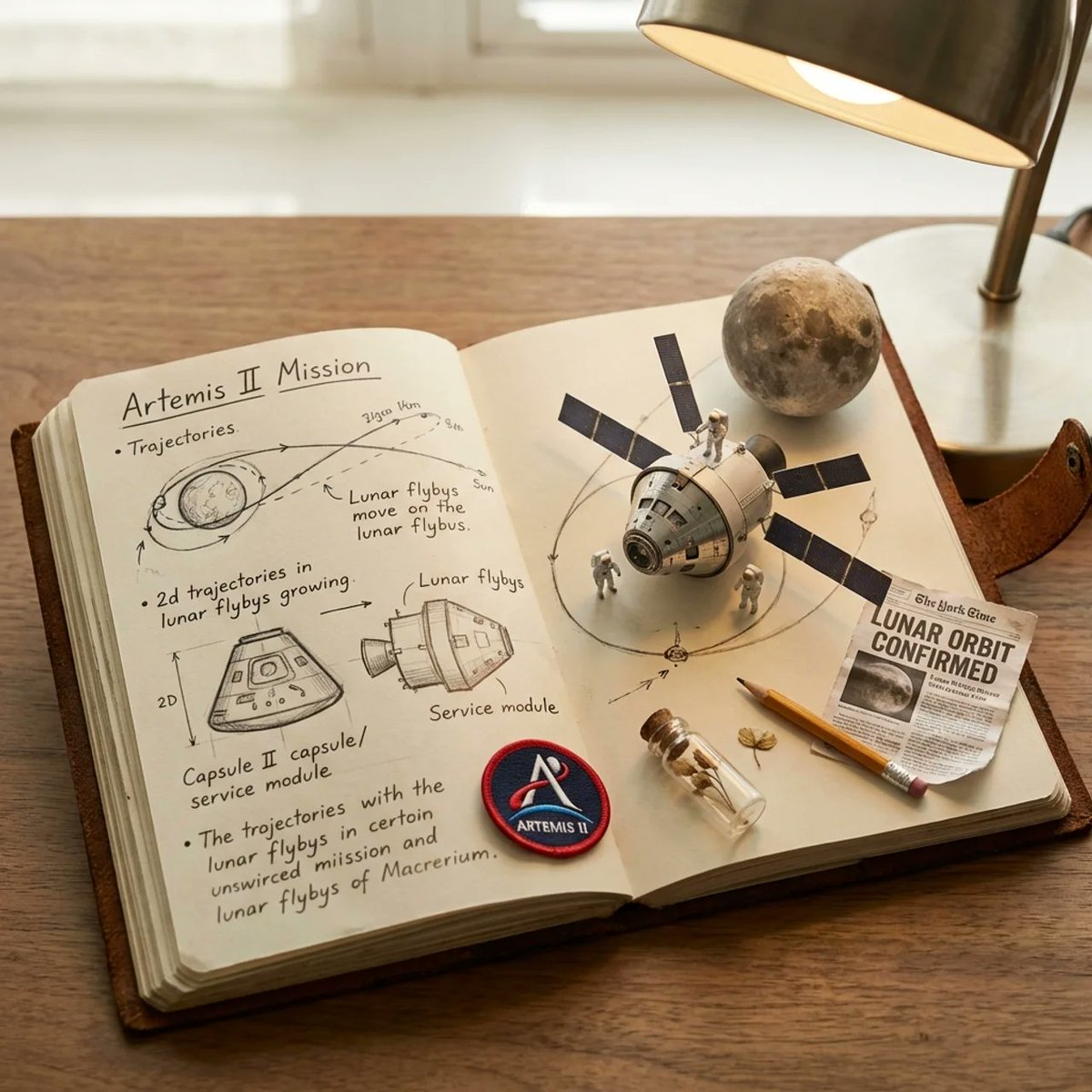
do this for Artemis II mission: class Artemis_Journal_Diorama: def __init__(self, subject="Artemis II Mission"): # AI infers the correct materials, textures, and desk environment self.stage = "AI‑inferred astronaut’s mission‑planning journal lying open on an AI‑inferred technical workstation." self. lighting = "AI‑inferred mixed illumination: task‑lamp warmth + cool instrument‑panel spill." def semantic_2D_to_3D_growth(self): # AI infers what '2D mission sketches' look like for this subject page_texture = ( f"AI‑inferred handwritten notes, trajectory arcs, module schematics, " f"and mission annotations related to {self.subject}, rendered as precise 2D graphite diagrams." ) # AI infers what physical 3D elements should emerge from those sketches diorama_pop = ( f"2D mission diagrams transition into physical 3D miniatures: " f"AI‑inferred spacecraft components, crew figures, lunar geometry, " f"and mission‑specific hardware rising seamlessly from the paper." ) return [page_texture, diorama_pop] def scatter_ephemera(self): # AI infers mission‑relevant desk objects without hard‑coding categories return infer_aerospace_ephemera(self.subject) # Examples (AI‑inferred, not fixed): mission patches, navigation tools, # micro‑scale lunar models, printed telemetry, procedural checklists, # archival headlines, engineering pencils, etc. render(Artemis_Journal_Diorama())

Image Redrawing and Style Transfer Prompt

Image Redrawing and Style Transfer Prompt

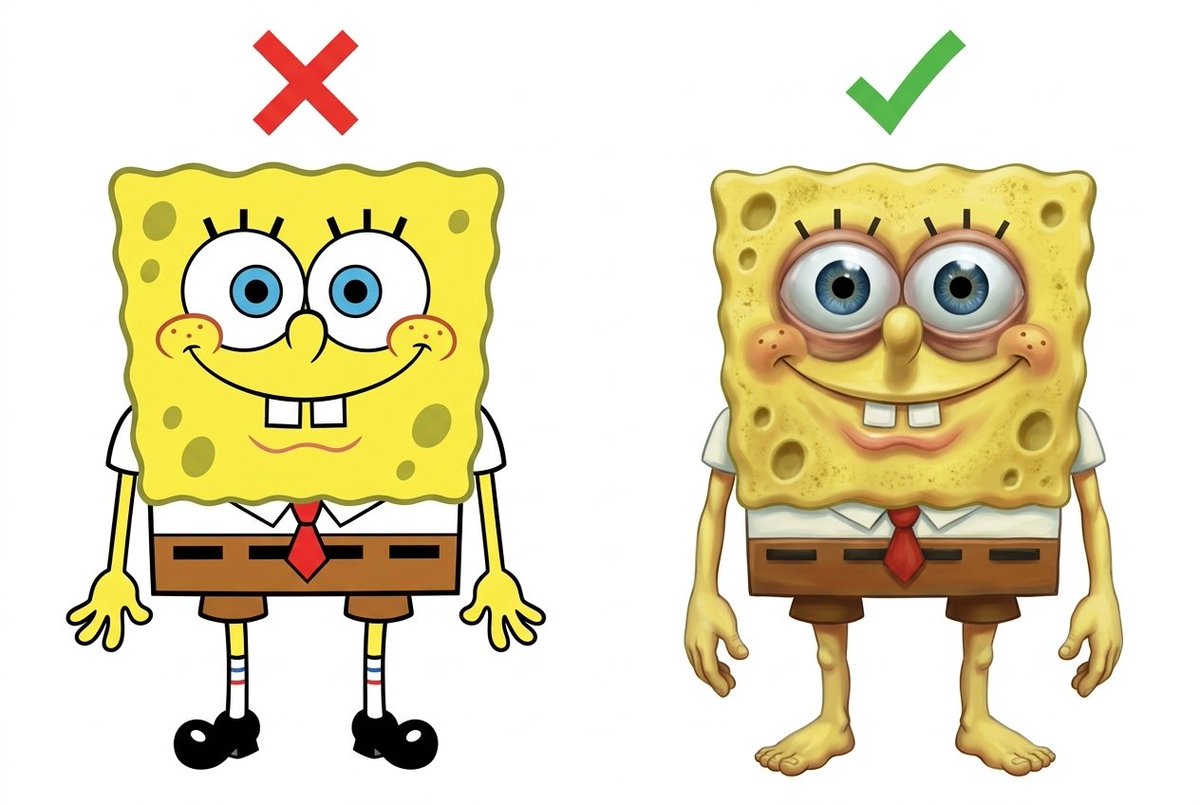
Carefully study Figure 1, and redraw Figure 2 according to its requirements. Place Figure 2 and the redrawn version on the left and right sides of the same white background image, ensuring the logo is not visible.

Cities as Kinetic Sculptures Grid

Cities as Kinetic Sculptures Grid

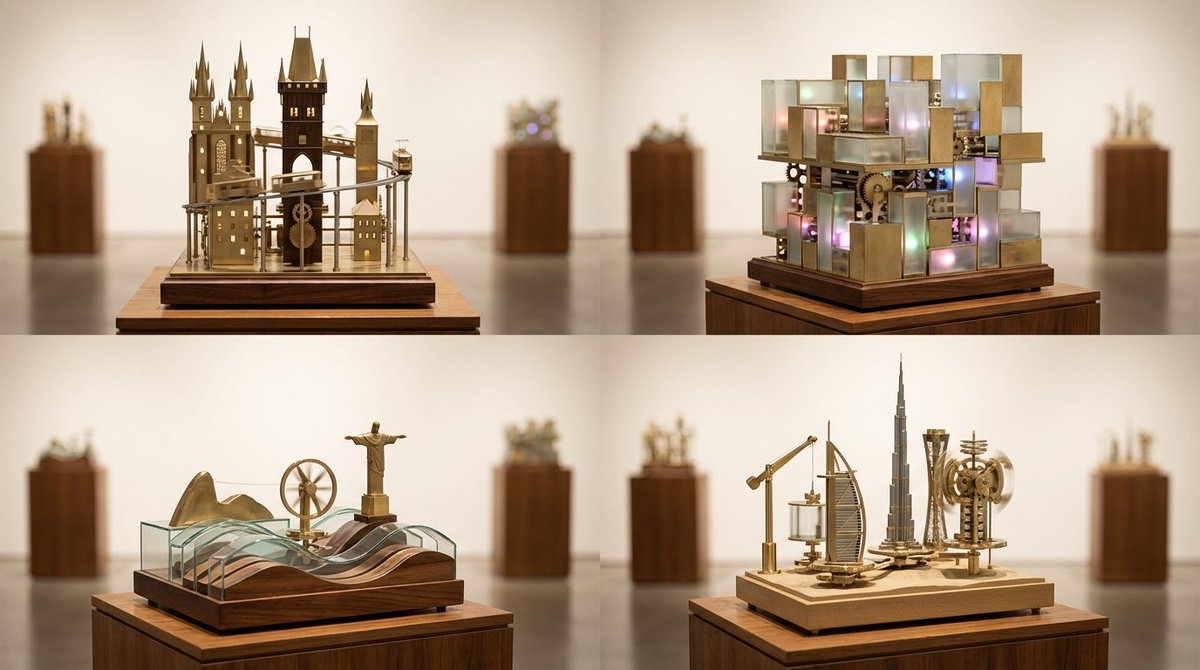
A 2x2 grid of 4 random famous cities turned into looping kinetic sculptures on museum plinths [Top Left: random real European city as a vertical kinetic skyline with moving trams and tiny lights] [Top Right: random real Asian megacity as a multi-layered kinetic light grid with sliding blocks] [Bottom Left: random real coastal city with rolling wave mechanisms and rotating landmarks] [Bottom Right: random real desert or inland city with lifting arms and spinning towers] Photoreal miniature kinetic sculptures made of brass, glass, and polished wood, subtle motion implied by blurred rods and tracks, illuminated display plinths in a gallery setting, soft museum lighting, gentle reflections on the floor, 60mm perspective for elegant compression, shallow depth of field isolating each sculpture, warm white seamless backdrop, crisp focus on intricate mechanics.

Medieval Altarpiece Display of Ghormeh Sabzi

Medieval Altarpiece Display of Ghormeh Sabzi

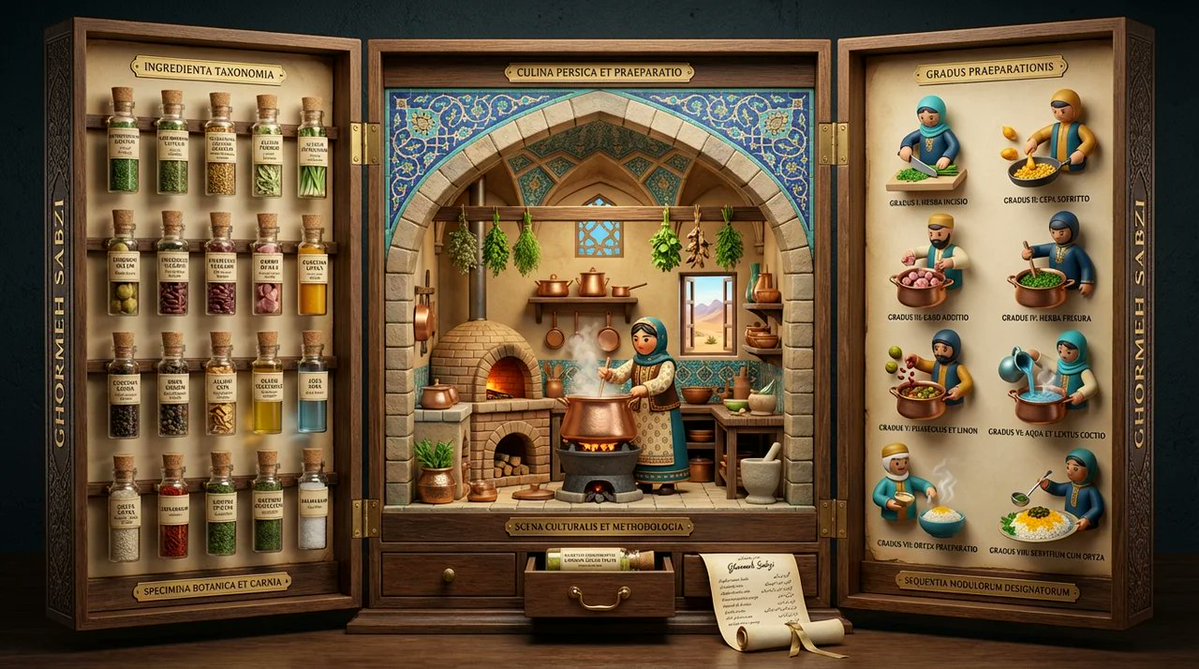
<instruction> Input A is a famous dish (photo or dish name). Analyze the dish's ingredient taxonomy, preparation methodology, cultural preparation setting, and historical documentation style. Optional Input B is a style reference (3d mod designer toy luxury product packaging). Goal: Three-panel folding display (12" tall, 36" wide when open) structured like a medieval altarpiece, with each panel revealing different aspects of the dish's story through museum-quality presentation. Rules: Left panel: 15-20 ingredients mounted as specimens in tiny bottles with handwritten Latin/scientific labels Center panel: 3D pop-up kitchen diorama with cultural figure preparing dish, architectural elements from origin region Right panel: 6-8 precise preparation steps as 3d mod designer toy style Closes into protective case with magnetic closure and embossed exterior Exterior: ornate typography with dish name in gold foil Small drawer at base containing actual spice sample or "secret ingredient" Color palette drawn from traditional pottery/textiles of origin culture Include tiny rolled "scroll" with full recipe in calligraphy Output: ONE image, 16:9 showing triptych fully opened, shot straight-on, museum exhibition lighting </instruction>

Hyper-Realistic Product Photography and Infographic Prompts for Pepsi

Hyper-Realistic Product Photography and Infographic Prompts for Pepsi

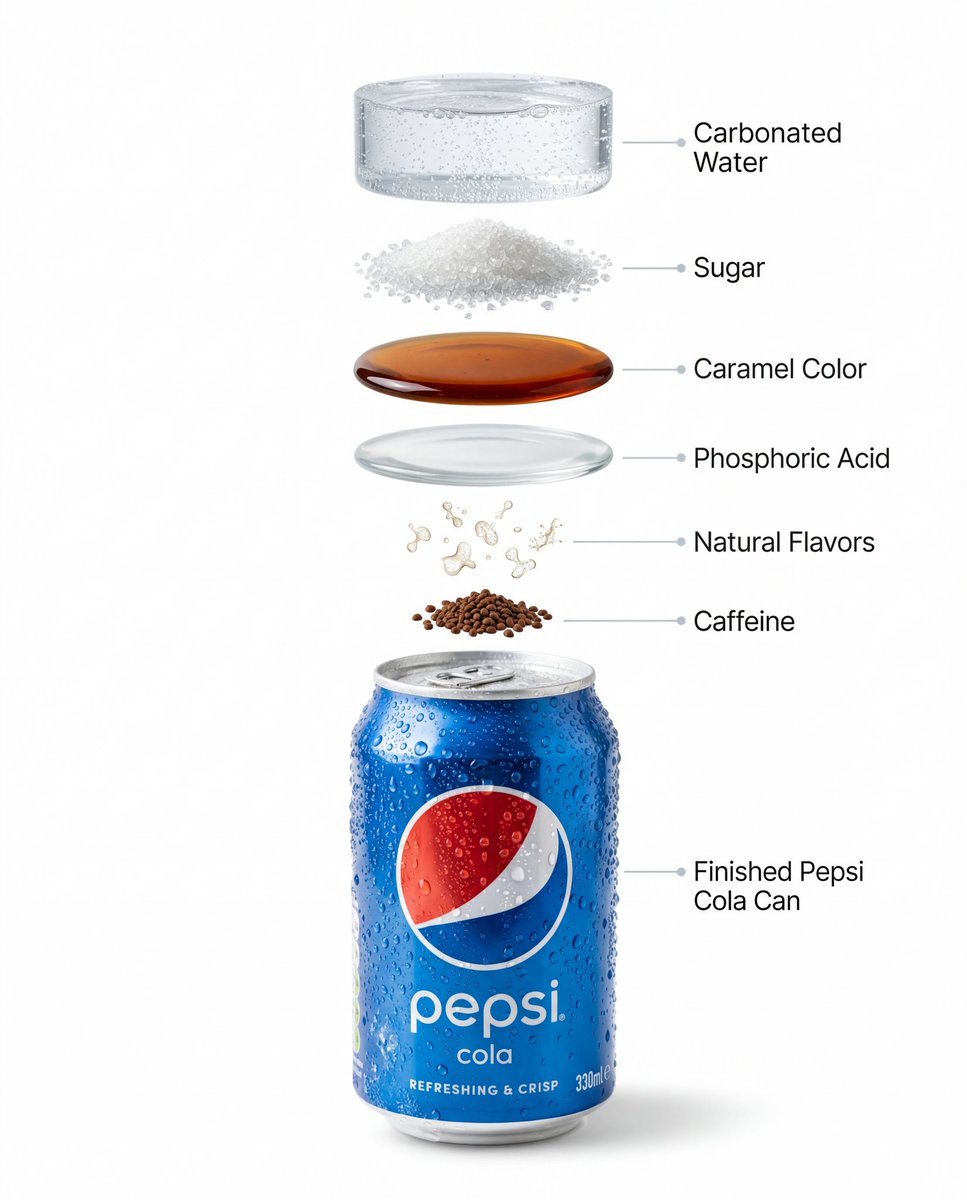
Image 1 : High-quality professional product photography of a chilled {argument name="beverage brand" default="Pepsi"} can with condensation water droplets and a refreshing, icy look. The aluminum can appears crisp and glossy with realistic highlights, subtle reflections, and visible cold texture. Shot in a minimalist commercial beverage advertising style against a pure white background with soft natural shadows. Sharp focus, ultra-clean composition, modern aesthetic. Image 2 : Create a hyper-realistic vertical exploded infographic illustrating the ingredients of a Pepsi soft drink. At the top, clear carbonated water shown as sparkling liquid with fine rising bubbles. Below it, floating white sugar crystals with sharp crystalline texture. Beneath that, a rich amber-brown caramel color layer with glossy, syrup-like depth. Next, a subtle translucent layer representing phosphoric acid with a clean liquid look. Below it, abstract aromatic particles symbolizing natural flavors, light and minimal. Further down, small dark caffeine granules suspended mid-air. At the bottom, a chilled blue aluminum cola can standing upright with realistic condensation droplets and metallic reflections. Pure solid white background, soft studio lighting, subtle realistic shadows under each floating layer, ultra-sharp focus, DSLR macro photography look. Clean minimalist infographic labels with thin pointer lines for each ingredient. Premium beverage advertising aesthetic, modern, photorealistic.

Four-Panel Manga: The Magic of Numbers

Four-Panel Manga: The Magic of Numbers

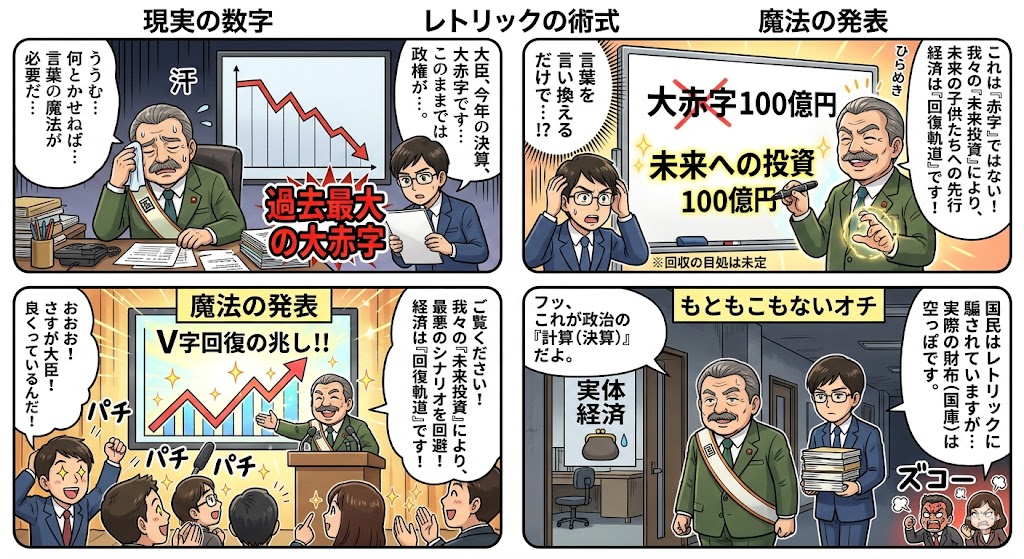
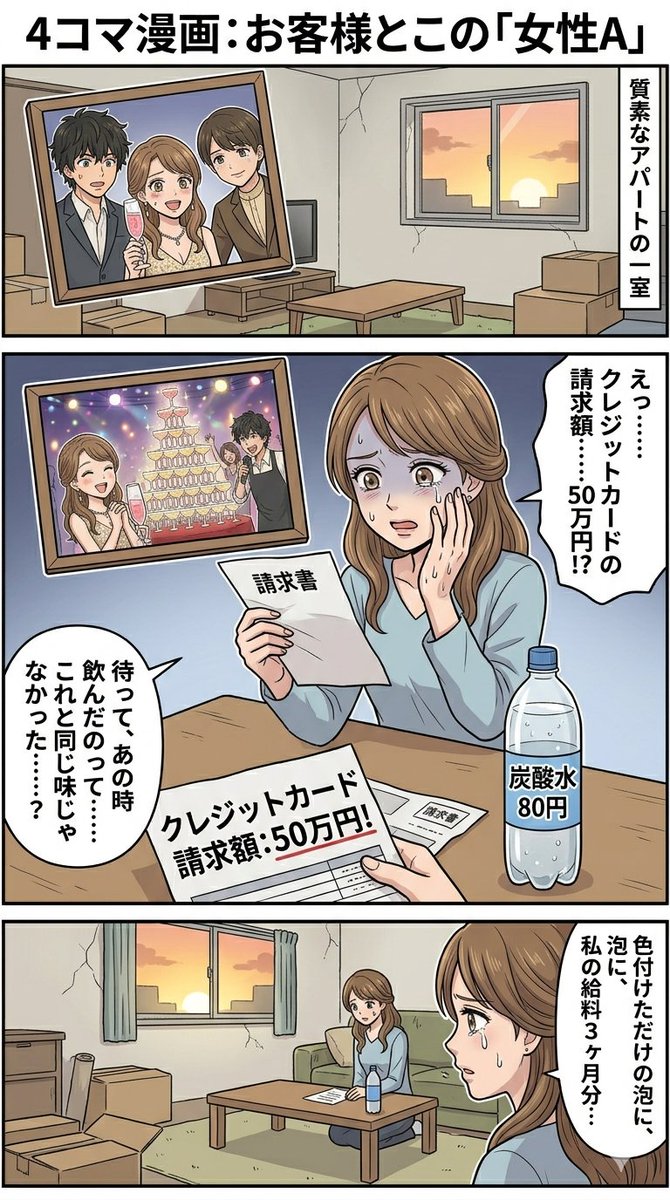
How settlement and budget figures change their appearance through political magic. Just by rephrasing a deficit as an investment, behold the wonder.

Technical Architectural Blueprint of a Smash Burger

Technical Architectural Blueprint of a Smash Burger

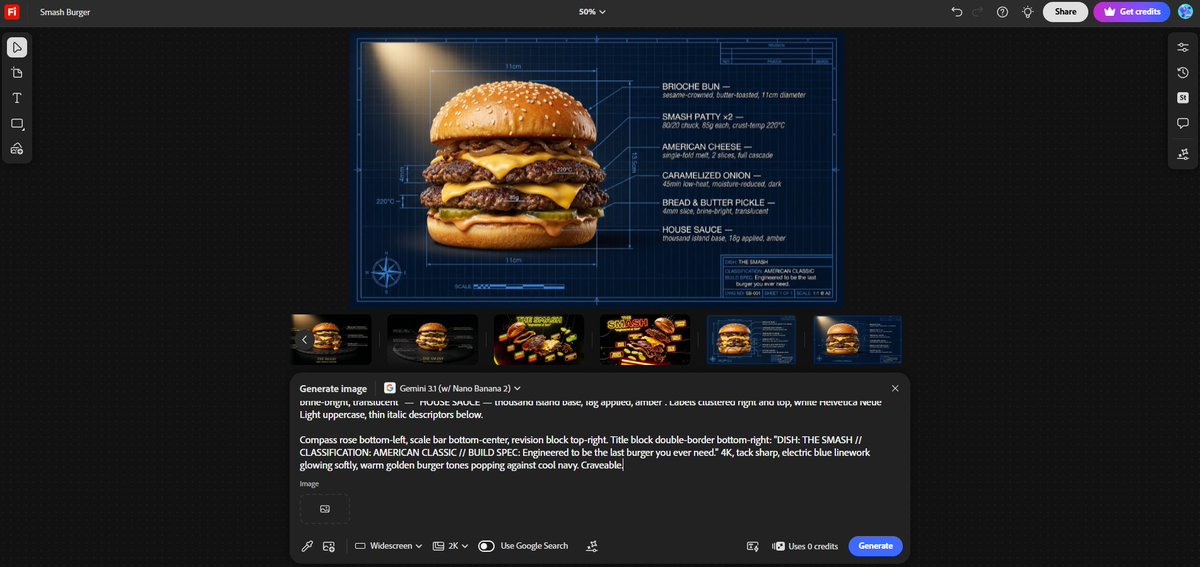
Technical architectural blueprint of a Classic Smash Burger on deep navy drafting paper. Hyperrealistic food hero centered-left, dramatically lit from upper left, warm studio spotlight, cross-section view revealing every layer in precise stack order, lacy-edged patties visible in full photorealistic color, cheese mid-cascade, bun toasted golden, sauce pooling at base catching warm light. Blueprint linework in electric blue, precise measurement lines, stack height callouts, patty thickness cross-section, bun diameter diagram, sauce trajectory arc, grid overlay. Labels connected by thin glowing CAD elbow-joint lines, no crossovers: "{argument name="label 1" default="BRIOCHE BUN sesame-crowned, butter-toasted, 11cm diameter"}" "{argument name="label 2" default="SMASH PATTY ×2 80/20 chuck, 85g each, crust-temp 220°C"}" "{argument name="label 3" default="AMERICAN CHEESE single-fold melt, 2 slices, full cascade}" "CARAMELIZED ONION 45min low-heat, moisture-reduced, dark" "BREAD & BUTTER PICKLE 4mm slice, brine-bright, translucent" "HOUSE SAUCE thousand island base, 18g applied, amber". Labels clustered right and top, white Helvetica Neue Light uppercase, thin italic descriptors below. Compass rose bottom-left, scale bar bottom-center, revision block top-right. Title block double-border bottom-right: "DISH: THE SMASH // CLASSIFICATION: AMERICAN CLASSIC // BUILD SPEC: Engineered to be the last burger you ever need." 4K, tack sharp, electric blue linework glowing softly, warm golden burger tones popping against cool navy. Craveable.

Monochrome Engraving Portrait Style

Monochrome Engraving Portrait Style

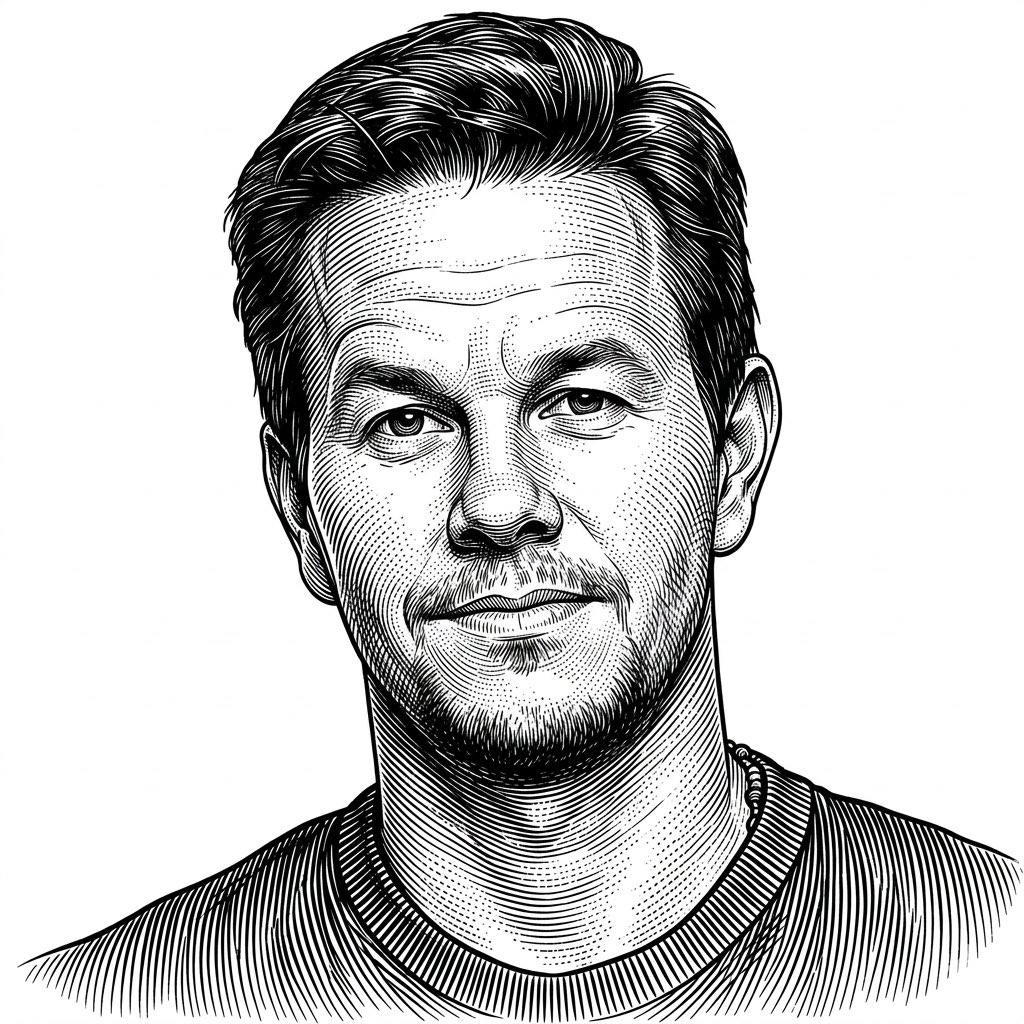
Use the Uploaded photo as reference, Vintage engraving illustration style, highly detailed black ink linework, dense parallel hatching and cross-hatching, precise contour engraving lines, woodcut and etching influence, classical printmaking aesthetic, monochrome black and white palette, intricate line density variation to create depth and volume, curved line flow following form anatomy, stippling accents for soft shading, old master engraving technique, baroque illustration feel, antique scientific illustration style, ultra fine (line precision), high contrast with clean negative space, ornamental yet anatomical rendering, hand-engraved texture simulation, timeless classical art style, meticulous craftsmanship, no color, no gradients, purely line-based shading.

Deconstructed Ingredients Visualization

Deconstructed Ingredients Visualization

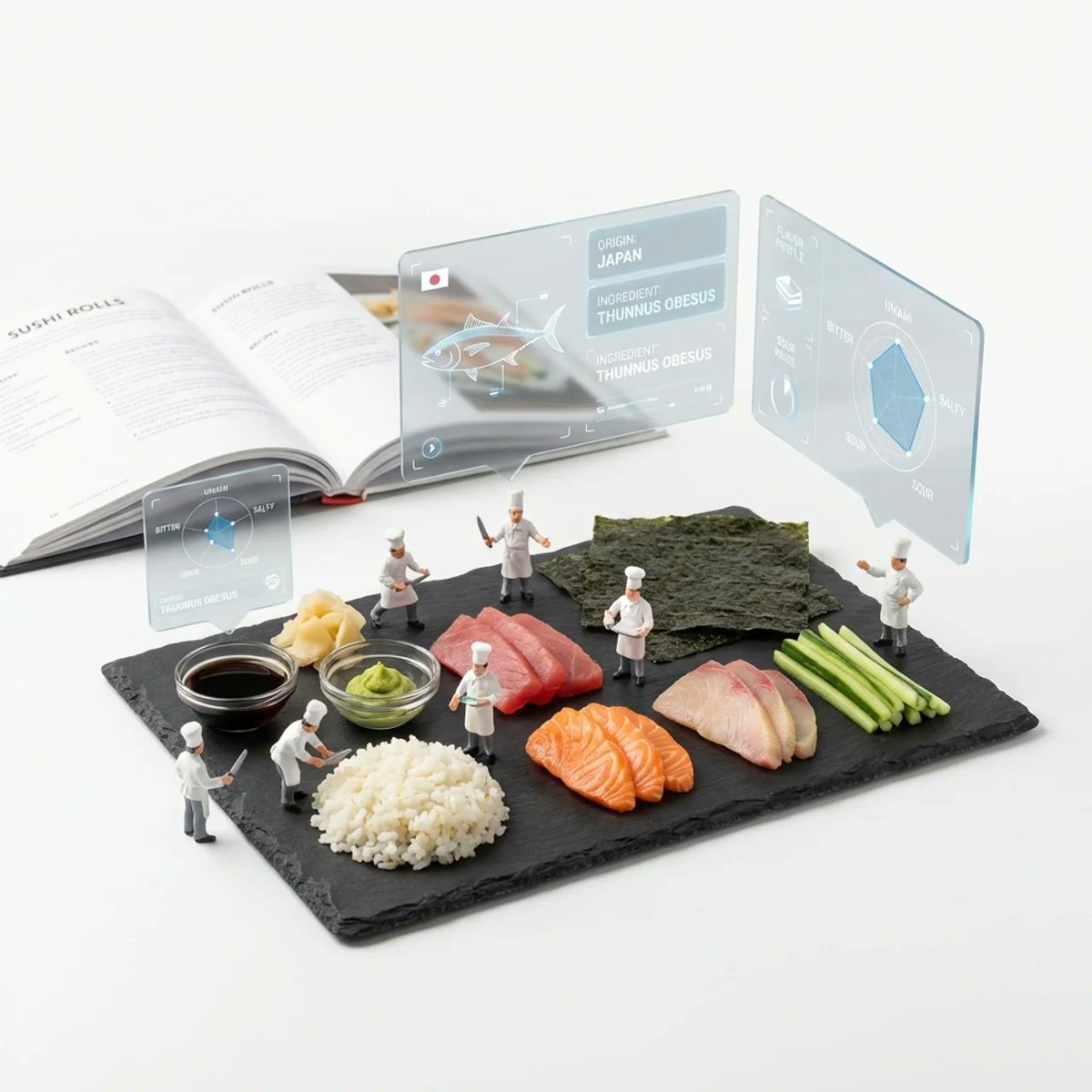
( Deconstructed_Ingredients_{argument name="dish name" default="[DISH_NAME]"} * 1.5 ) + ( Miniature_Plastic_Toy_Chef * 1.2 ) + ( Floating_Frosted_Glass_AR_UI_Panels * 1.5 ) + ( Flavor_Profile_Radar_Charts * 1.0 ) + ( Slate_Serving_Board * 1.0 ) + ( Blurred_Cookbook_Background_{argument name="dish name 2" default="[DISH_NAME]"} * 0.8 ) + ( Pure_White_Studio_Void * 1.0 ) - ( Human_Sized_Chef / 2.0 ) - ( Messy_Plating / 2.0 )

Caravaggio Meets National Geographic Dissection

Caravaggio Meets National Geographic Dissection

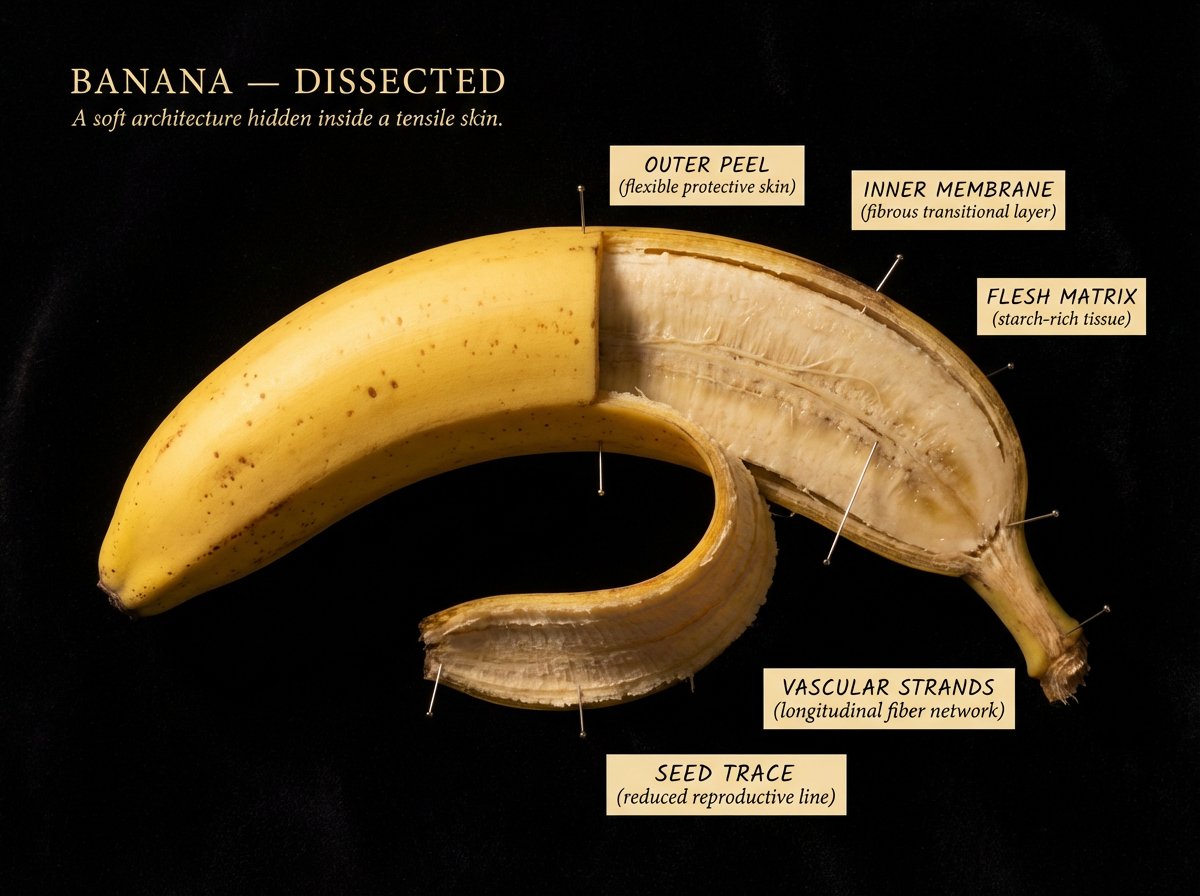
[NATURAL OBJECT] dissected as if by a master naturalist who found it in the wild. Split and pinned open like a specimen, but lit as if Caravaggio worked for National Geographic. Every internal structure glowing with its own material truth. Cross-section so sharp it feels violent. Interior so beautiful it feels sacred. The full object present, one half intact, one half opened to its core, every layer at the resolution of obsession. Background: pure black velvet. The object floats in it like something precious and dangerous. Labels pressed close, handwritten-weight serif, never floating: "[STRUCTURE]" / "[MATERIAL TRUTH]" / "[AGE OR SCALE]" "[OBJECT] DISSECTED" title in warm ivory caps, upper left. "[One line that makes you lean closer]" italic beneath. Mood: Audubon illustration meets Caravaggio meets the most beautiful science photograph ever taken. 4K, specimen lighting, extraordinary interior detail, nothing clinical, everything alive.

Slow Motion Pour Food Photography Prompt for Nano Banana 2

Slow Motion Pour Food Photography Prompt for Nano Banana 2

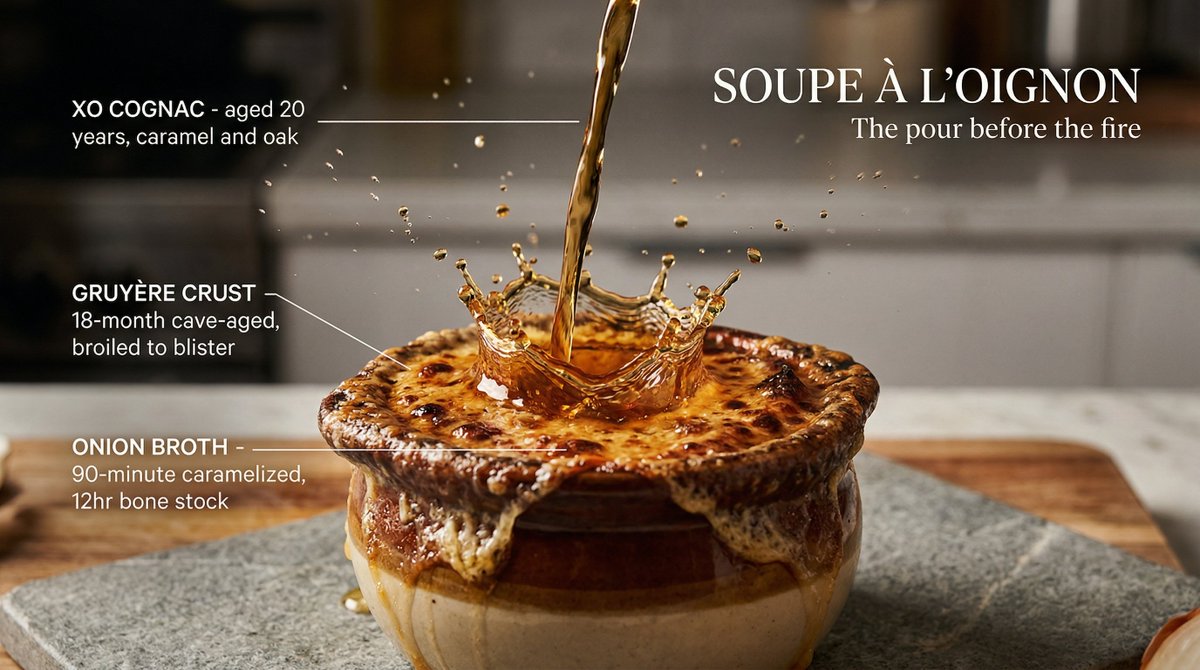
[DISH] at the precise moment of a dramatic [LIQUID] pour in ultra high-speed photography, liquid cascade frozen mid-fall in perfect clarity. Hero [DISH] center on matte [COLOR] surface, [LIQUID] pouring from above in one cinematic ribbon catching warm single-source light, splitting and branching into suspended droplets and threads as it hits the surface. Splatter crown frozen at moment of impact, droplets suspended in perfect arcs. Every surface texture hyperreal: glistening, steaming, sauce pooling in slow motion. Each element labeled with ultra-thin lines in clean uppercase: "[INGREDIENT] [descriptor]". Dish name in elegant editorial typography: "[DISH NAME]". Subtitle: "[TAGLINE]". Mood: Albert Watson food photography meets Harold Edgerton fluid dynamics meets Michelin-star editorial. 4K, tack sharp every thread and droplet, warm single-source light, extraordinary and craveable.

Technical Blueprint of an AI GPU Cluster

Technical Blueprint of an AI GPU Cluster

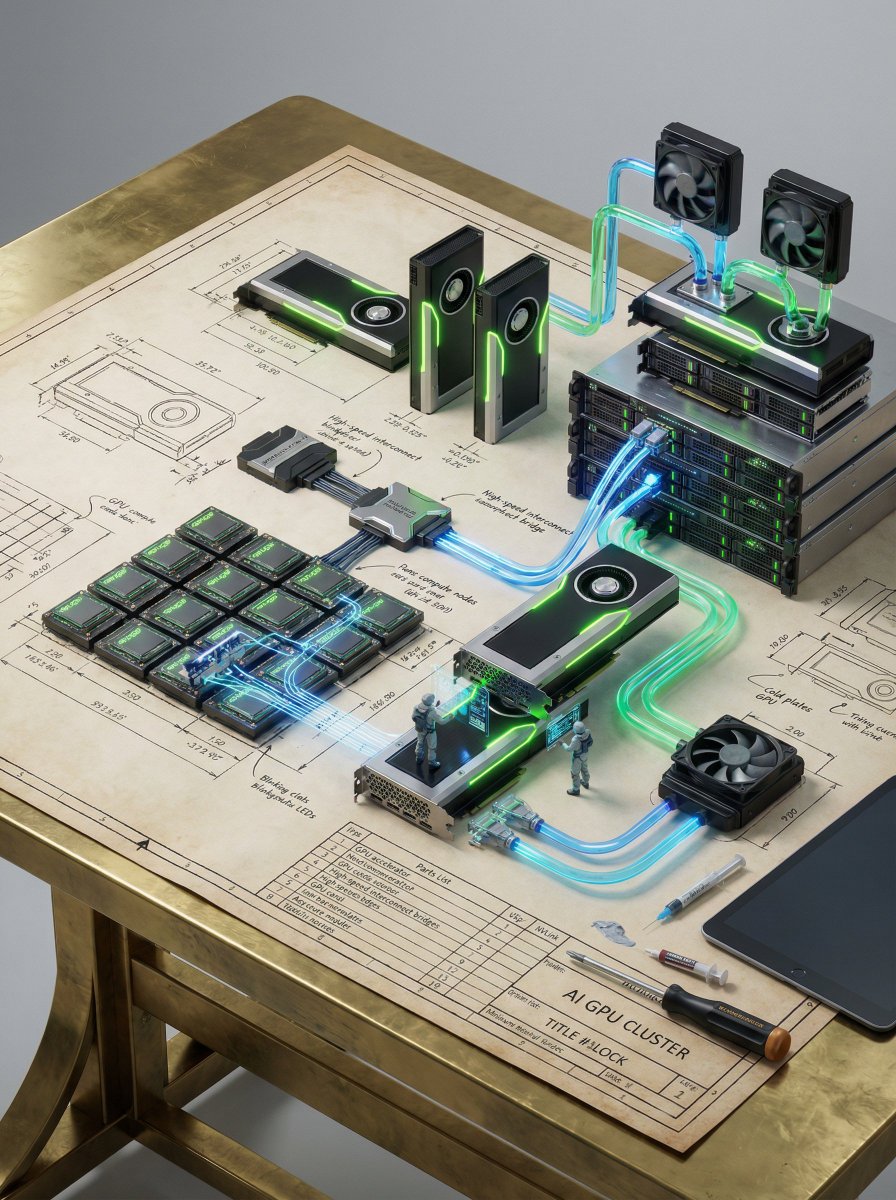
A detailed technical blueprint of a high-performance AI GPU cluster placed on a polished brass drafting table, with a photorealistic miniature AI server system self-assembling from it — multiple GPU accelerator units (sleek black and metallic modules with neon green accents) rising from the dimension lines, high-speed interconnect bridges threading through the tolerance annotations, and dense compute nodes forming from the grid layout. Stacks of GPU cards slide into server chassis above the parts list, each unit locking in with precision. NVLink-style connectors and high-bandwidth interconnects assemble seamlessly between GPUs, forming a powerful parallel compute network. Rack-mounted AI servers emerge vertically, with layered compute blades building upward in perfect alignment. A liquid cooling system forms from exploded-diagram callouts — transparent cooling pipes with glowing coolant flowing through them, cold plates attaching to GPUs, and radiators assembling with high-performance fans. Heat dissipation fins and airflow channels dynamically shape around the system. A tiny engineer in futuristic protective gear stands on a GPU module inspecting circuits with a holographic diagnostic interface, while another miniature technician connects high-speed data cables into a switch unit. Fiber optic lines glow faintly, representing active data transfer. Functional details illuminate — GPU core lights pulsing softly, status LEDs blinking in synchronized patterns, data streams visualized as glowing lines moving between nodes, and monitoring panels activating during assembly. Signature tools of the trade — precision screwdriver, thermal paste applicator, anti-static tools, fiber connectors, and a digital diagnostic tablet — rest across the blueprint’s title block, partially integrated into the scene. All elements grow organically from the blueprint like a 3D mechanical diorama — circuit traces rising from printed schematics, GPU modules emerging from drawn outlines, cables threading through pencil grid lines. Seamless transformation from 2D blueprint into a fully operational AI infrastructure. LIGHTING: Soft studio lighting combined with strong neon green and cool blue glows from GPUs and data pathways. Subtle reflections from the brass surface and volumetric light enhancing depth. CAMERA & LENS: Shot on a full-frame camera, 35mm lens. Slight low-angle perspective to emphasize scale and power. Cinematic depth of field with focus on central GPU cluster. COMPOSITION: Vertical 2:3 format. Central stacked GPU cluster rising upward with symmetrical balance. Clean negative space around edges with layered depth. STYLE & MOOD: Futuristic, cinematic, high-end AI infrastructure aesthetic inspired by NVIDIA design language. Powerful, clean, and cutting-edge. DETAILS: Ultra-detailed textures — matte black metal, glowing accents, micro circuitry, cooling liquid reflections, cable braiding, LED indicators. 8K resolution, HDR,

2x2 Grid Pop-Up Cookbook Diorama Prompt for Nano Banana

2x2 Grid Pop-Up Cookbook Diorama Prompt for Nano Banana

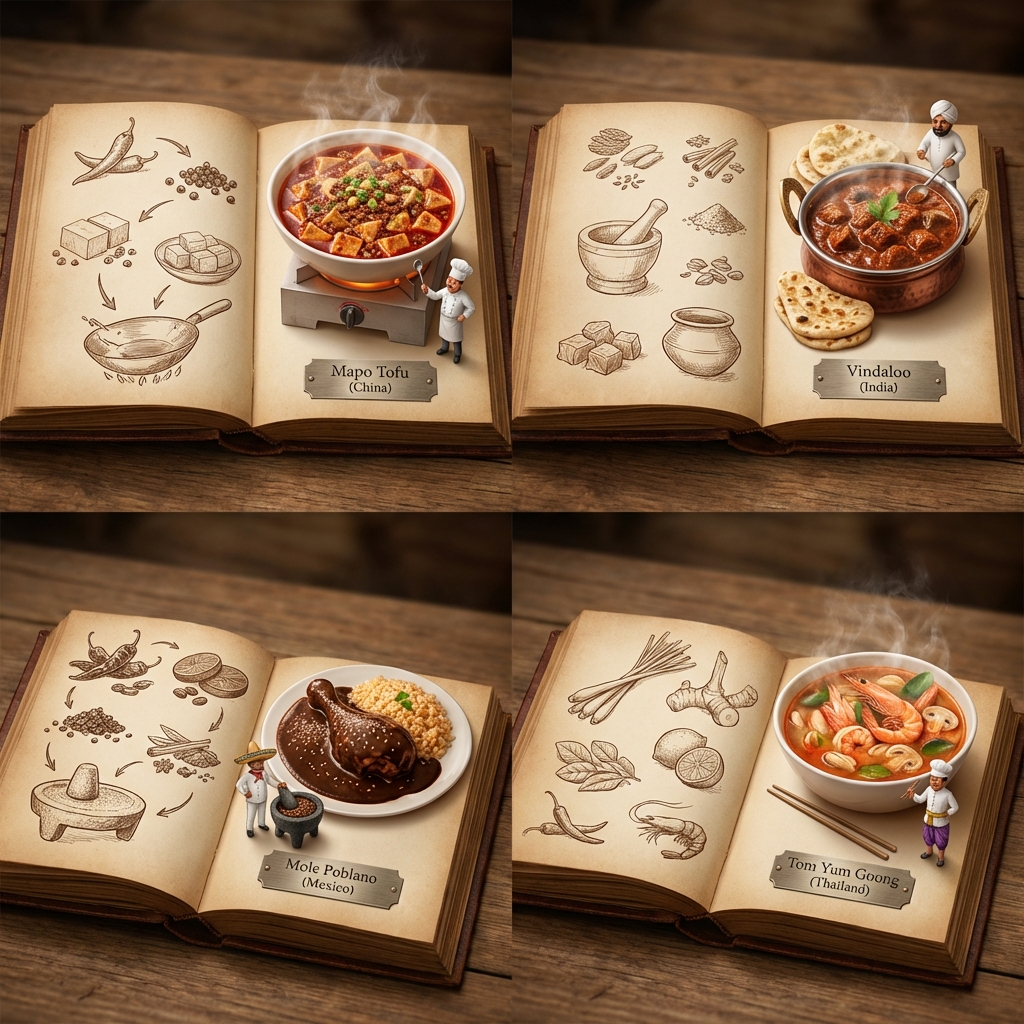
<instructions> [Use the UNIVERSAL WRAPPER above exactly as-is.] If input includes ingredients, pick 4 distinct countries with famous dishes that fit those ingredients (hidden gems welcome). Output one 2x2 grid: each panel shows an open book spread for that country. Per panel: - Left page: 2D vintage sepia sketches (timeline/illustrated recipe flow, minimal text). - Right page: 3D pop-up diorama of the finished steaming dish emerging from the page. - A tiny chef mini stands beside the dish. - All 4 books look like one cohesive atlas series. - Only readable text: engraved plate “Dish ({argument name="country name" default="Country"})”. Style: Cinematic top-down lighting emphasizing 2D vs 3D depth, macro detail, cohesive atlas design, clean background, shallow DOF, no logos, no long text. </instructions>

Augmented Reality UI Overlays on Food Items

Augmented Reality UI Overlays on Food Items

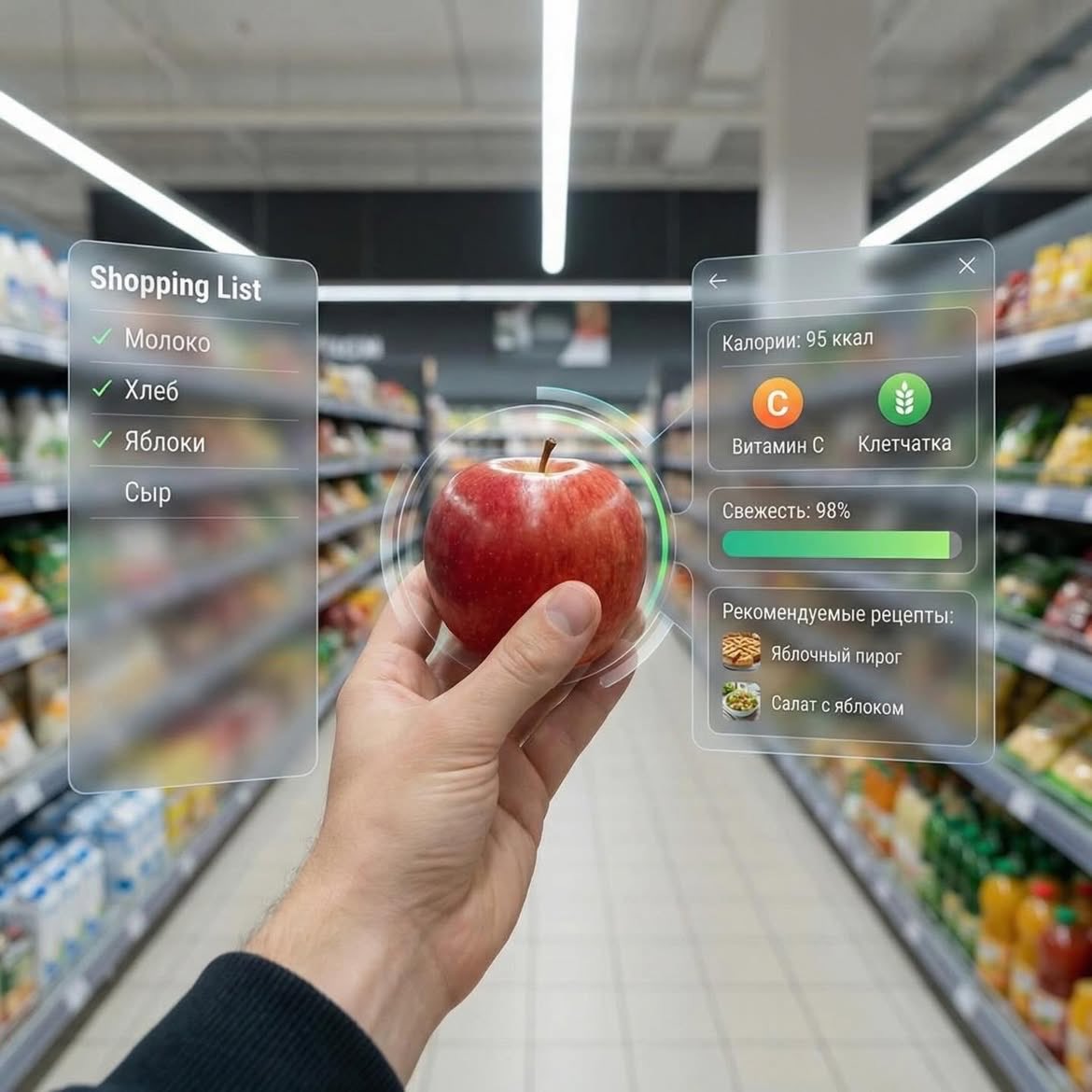
Dessert (AR shopping UI) POV shot inside a modern supermarket aisle, hands holding a small gourmet dessert with cream and berries, futuristic augmented reality (AR) interface overlay showing calories, sugar, fats, freshness score, expiry date, and recipe suggestions, soft depth of field, cinematic lighting, ultra-realistic, 4K, tech-inspired UI, clean glassmorphism design ⸻ 2. Apple (AR nutrition UI) First-person view in a grocery store holding a fresh red apple, augmented reality interface displaying calories, vitamin C, fiber, freshness bar, and recipe ideas, minimal futuristic UI panels floating around the object, bright supermarket lighting, shallow depth of field, hyper-realistic, modern tech aesthetic, 4K ⸻ 3. Orange Soda Bottle (AR data UI) POV shot of hands holding an orange soda bottle in a supermarket aisle, futuristic AR overlay showing calories, sugar content, caffeine level, freshness score, expiry date, and drink recipes, sleek holographic interface, glassmorphism UI, vibrant colors, cinematic lighting, ultra-detailed, photorealistic, 4K

PCB Word Art Schematic for 'Tesla'

PCB Word Art Schematic for 'Tesla'

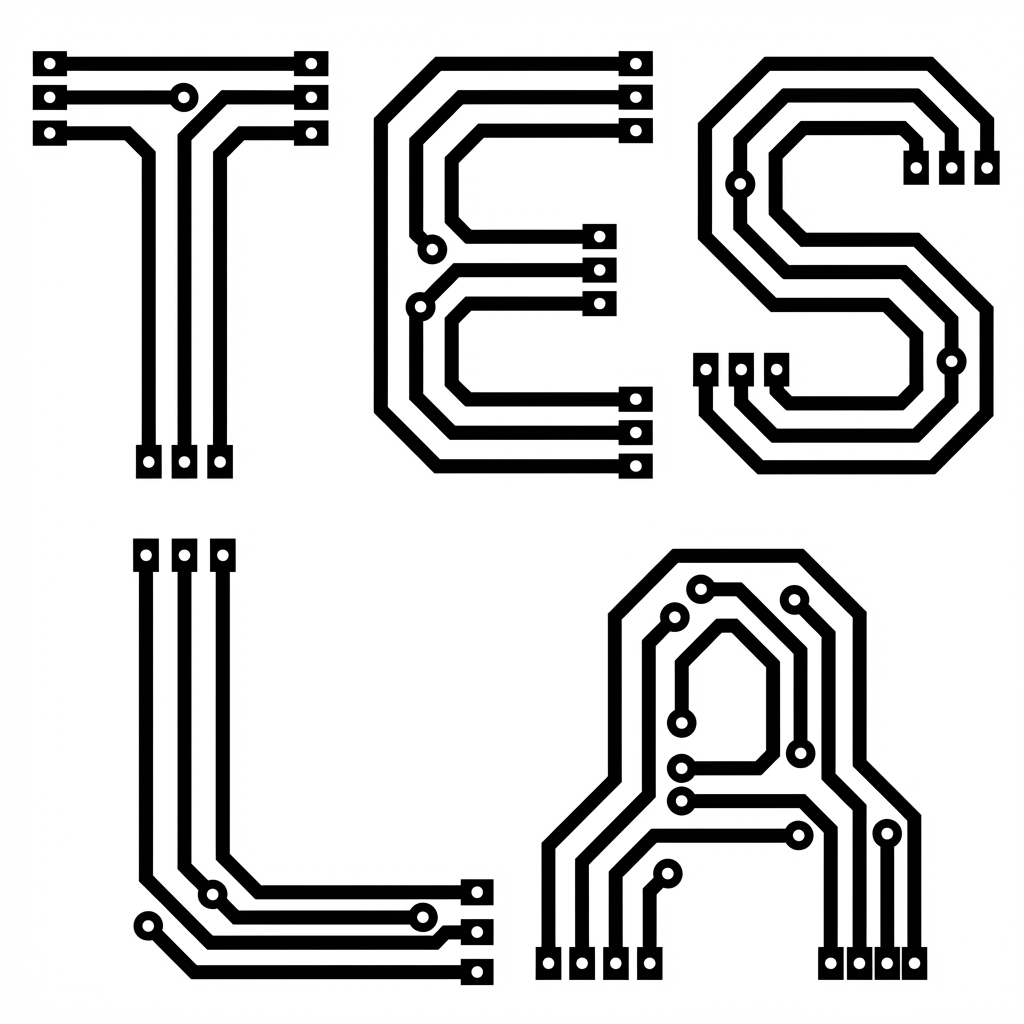
Anchor: The word "{argument name="word to construct" default="Tesla"}" :: constructed entirely from printed circuit board traces, where each letterform is a functional-looking PCB layout — solder pads as terminals, vias as joints, trace paths forming the strokes ::4 Morphology: Technical PCB illustration. Letter strokes are traces of varying widths. Circular vias punctuate stroke junctions. Solder pad rectangles anchor stroke terminals. The letters read as living circuit diagrams. Monochrome technical vector ::3 Material Physics: Jet black trace lines on white substrate, exposed copper-pad circles with concentric detail rings, uniform stroke weight with deliberate corner chamfers (45°) ::3 Illumination: Flat technical illustration lighting, no depth, pure 2D schematic clarity ::2 Render Stack: Electronics schematic aesthetic, hardware documentation style, Gerber file visual output ::1 Negative: [Silhouette shapes, actual electronic components, chip illustrations, realistic PCB green color, perspective, photographic textures, solder reflections] ::-1

Template for generating a fictional textbook page

Template for generating a fictional textbook page

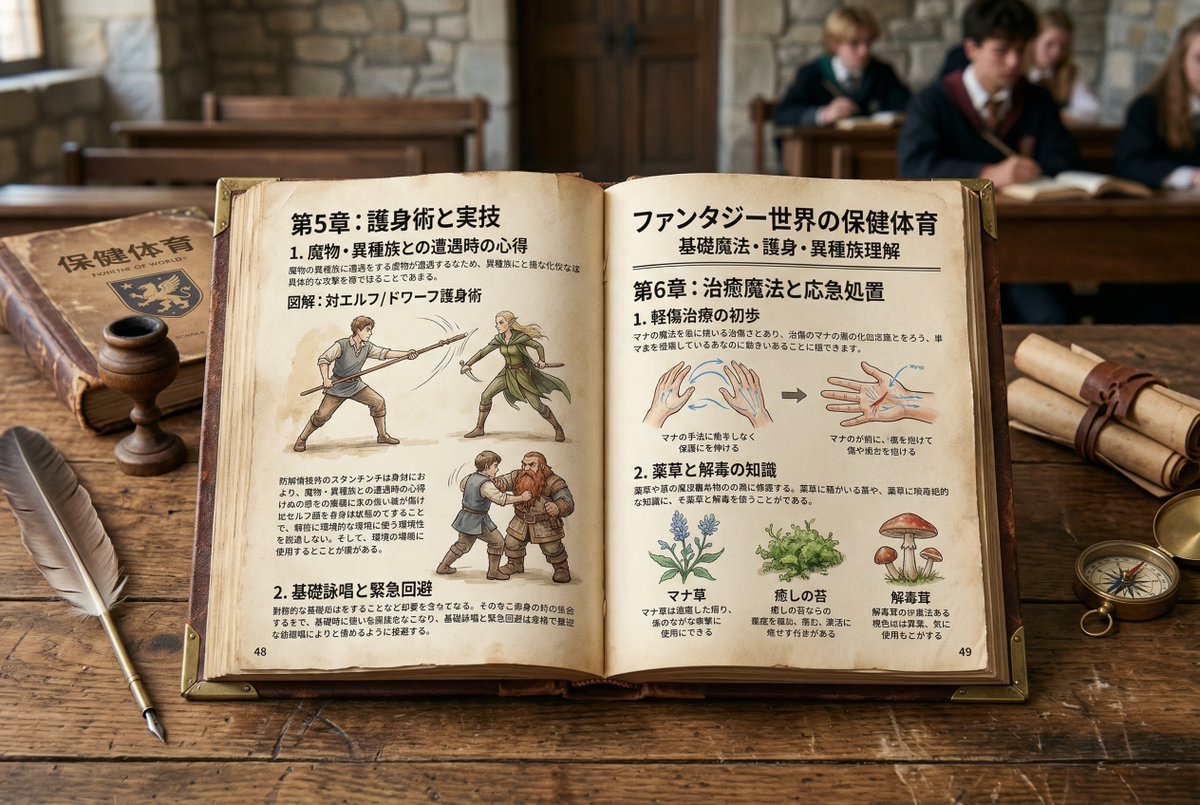
Create a page from a textbook on "{argument name="subject" default="Biology"}" used in a school in a "{argument name="worldview" default="Fantasy World"}". The content of the textbook must not be based on the real world, but must strictly adhere to the specified worldview. The content should be written in accurate Japanese, avoiding duplication of content and font corruption. The composition is a realistic photo of an open textbook taken directly from above, not an illustration.

Futuristic Holographic Burj Khalifa Blueprint

Futuristic Holographic Burj Khalifa Blueprint

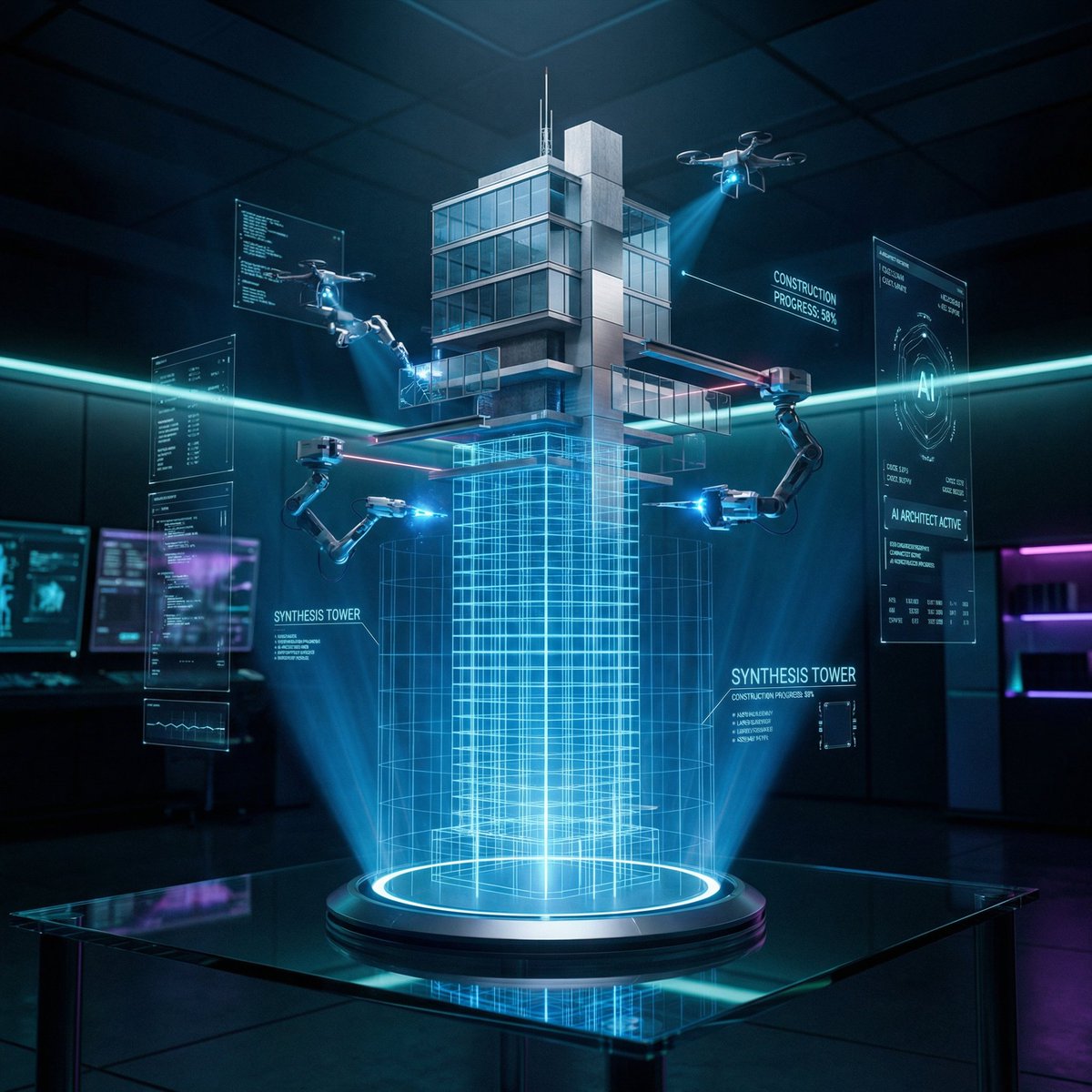
CONCEPT: A futuristic architectural blueprint of the Burj Khalifa projected as a glowing hologram, actively constructing itself in mid-air through robotic precision and digital intelligence. SUBJECT: A semi-transparent holographic version of the Burj Khalifa floating above a sleek glass smart table. The lower portion appears as a glowing blue wireframe blueprint, while the upper portion transitions into a fully photorealistic skyscraper with reflective glass panels and metallic structure as it builds itself in real-time. ENVIRONMENT: A high-tech architectural lab with a dark, minimal interior. The blueprint originates from a glossy black glass table embedded with touch controls, glowing UI panels, and soft neon edges. Subtle reflections of the hologram appear on the table surface. Background is clean, futuristic, and slightly blurred. STRUCTURAL DETAILS: The central spire rises as glowing gridlines before solidifying into steel and glass Tiered setbacks of the tower assemble through hovering robotic drones Glass facade panels lock into place with precise alignment and reflections Laser beams scan and map each level during construction Small AI drones orbit around the structure, actively building and welding components Materials transition from holographic light into real textures — polished glass, steel beams, and concrete core Floating UI overlays show measurements, grids, and rotating architectural schematics VISUAL MECHANIC: The blueprint exists in layered form — base is a glowing grid, mid-layer is a semi-transparent wireframe, and top layer is fully realistic. Certain sections flicker between hologram and solid material, emphasizing the transformation. LIGHTING: Dark environment with strong neon blue and cyan holographic glow. Subtle rim lighting created by reflections from the hologram. Volumetric light beams and soft particles enhance depth. CAMERA & LENS: Shot on a full-frame camera, 35mm lens. Slight low-angle perspective to emphasize scale and height. Sharp focus on the hologram core with slight background blur. COMPOSITION: Vertical 2:3 format. The Burj Khalifa hologram is centered, rising upward. UI elements orbit symmetrically around it. Clean negative space enhances the futuristic aesthetic. STYLE & MOOD: Futuristic, cinematic, high-tech, and minimal. Feels like advanced AI-driven architecture and innovation. Clean, premium, and visually striking. DETAILS: Ultra-sharp holographic lines, glowing particles, realistic glass reflections, smooth transitions between digital and physical materials, micro UI details, 8K resolution, HDR, cinematic color grading with blue/cyan tones and deep contrast. NEGATIVE PROMPT: cluttered environment, low detail, dull lighting, messy UI, cartoon style, distorted structure, blurry hologram, watermark
The Naturalist Dissection Prompt

The Naturalist Dissection Prompt

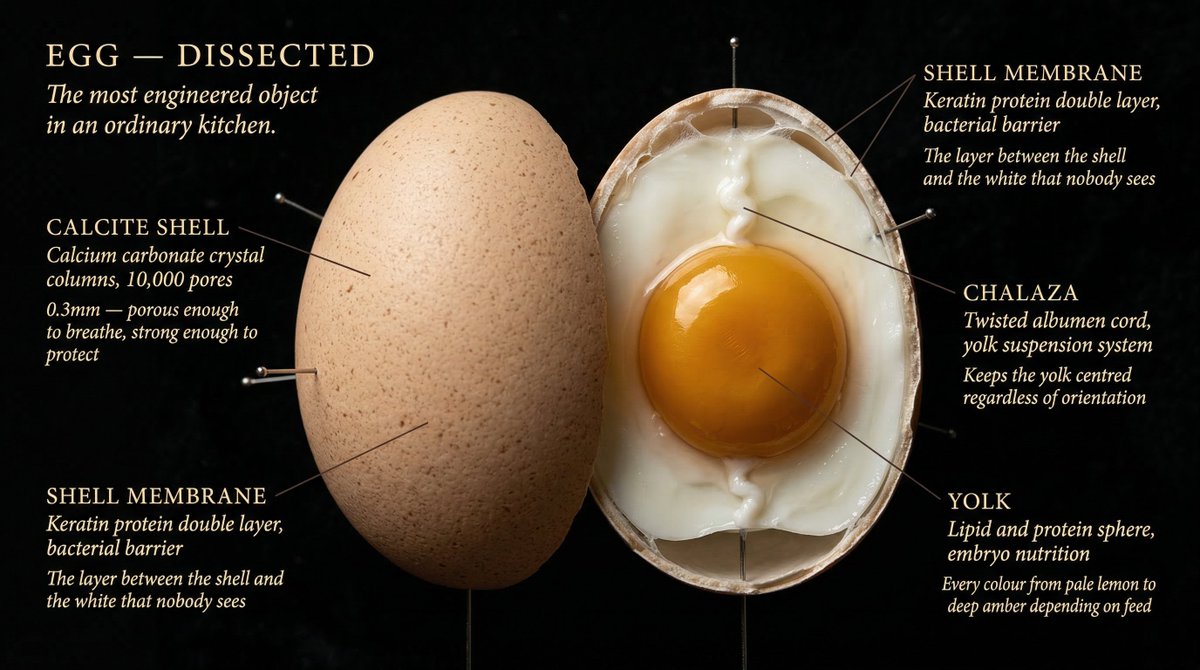
[NATURAL OBJECT] dissected as if by a master naturalist who found it in the wild. Split and pinned open like a specimen, but lit as if Caravaggio worked for National Geographic. Every internal structure glowing with its own material truth. Cross-section so sharp it feels violent. Interior so beautiful it feels sacred. The full object present, one half intact, one half opened to its core, every layer at the resolution of obsession. Background: pure black velvet. The object floats in it like something precious and dangerous. Labels pressed close, handwritten-weight serif, never floating: "[STRUCTURE]" / "[MATERIAL TRUTH]" / "[AGE OR SCALE]" "{argument name="object" default="[OBJECT]"} DISSECTED" title in warm ivory caps, upper left. "{argument name="line" default="[One line that makes you lean closer]"}" italic beneath. Mood: Audubon illustration meets Caravaggio meets the most beautiful science photograph ever taken. 4K, specimen lighting, extraordinary interior detail, nothing clinical, everything alive.

Complex Machine Deconstruction Blueprint Prompt

Complex Machine Deconstruction Blueprint Prompt

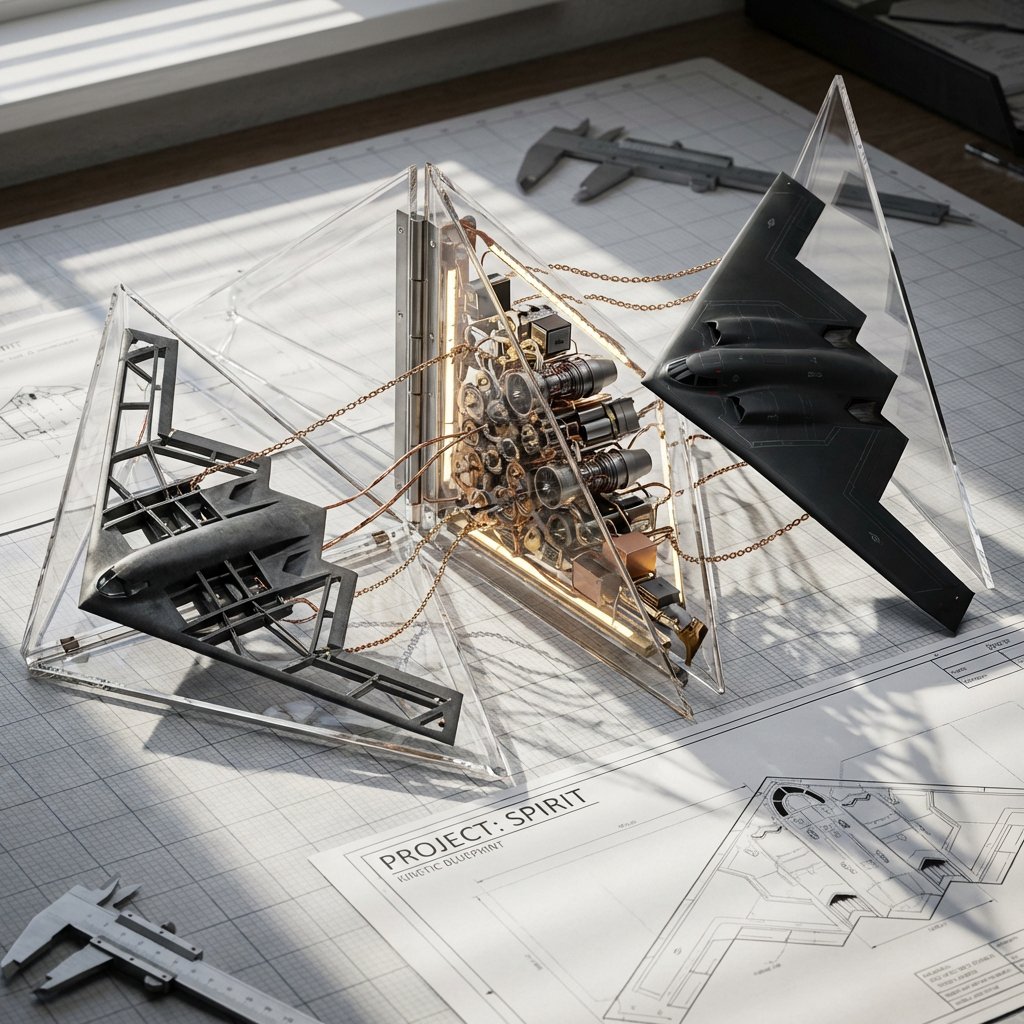
<instruction> Input A is a Complex Machine (e.g., {argument name="machine type" default="A Space Shuttle"}, A Grand Piano, A Clockwork Watch). Deconstruct into 3 Assembly Phases : Phase 1: Raw chassis/frame. Phase 2: Internal gears/wires. Phase 3: Finished exterior. 2. Container (The Geometric Unfold): Goal: "Kinetic Blueprint" Photography. The Object: A series of Triangular Acrylic Wedges attached to a central hinge, opening like a blooming flower or a tool-kit. The Layout: The wedges are partially unfolded across a drafting table surface. 3. The Dioramas (The Exploded View): Internal Content: Each wedge holds a different "Phase" of the machine. Visual Link: Real copper wires or brass chains physically cross the gaps between the acrylic wedges, "connecting" the assembly line. 4. Visual Background: A cluttered workshop desk with blueprints and calipers. Lighting: Hard side-lighting to cast shadows of the internal gears through the clear acrylic walls onto the table. Output: ONE image, 16:9 Aspect Ratio, 3D Macro Render, "Technical Art" aesthetic. </instruction>

Object Reasoning Test Prompt for Nano Banana 2

Object Reasoning Test Prompt for Nano Banana 2

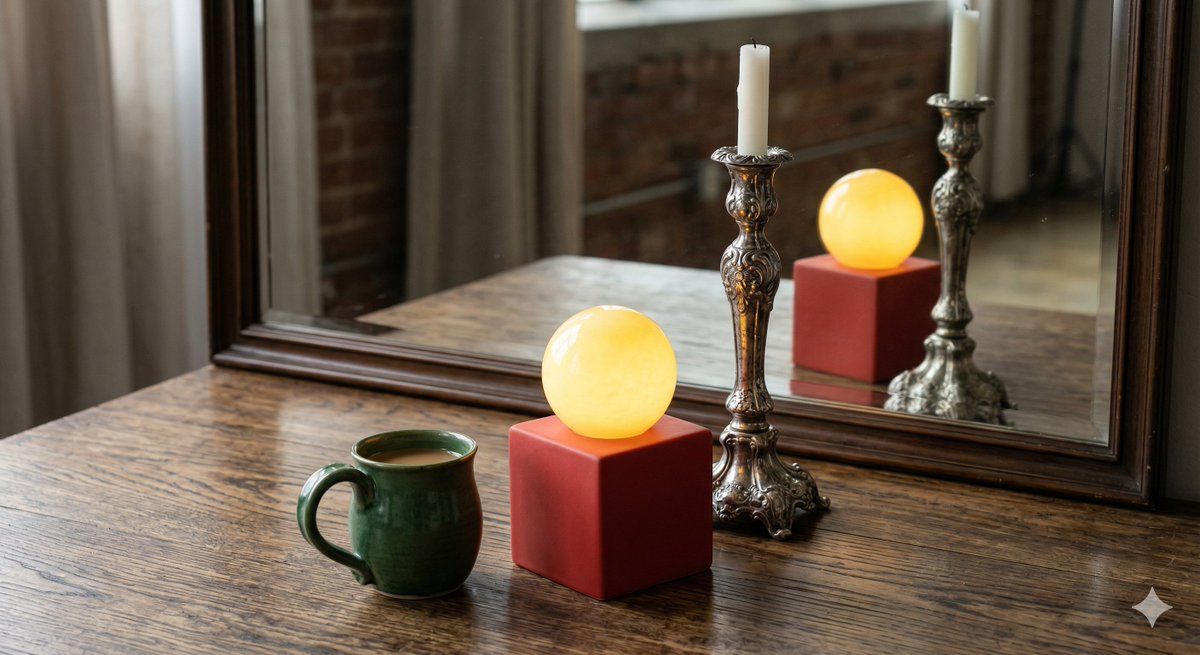
A photorealistic studio shot. On a wooden table sits a solid red cube. Resting exactly on top of the red cube is a glowing yellow sphere. Directly to the left of the red cube is a green ceramic coffee mug. Directly behind the red cube is a tall, ornate silver candlestick. Behind all of these objects is a large, clear mirror reflecting the scene. In the mirror's reflection, the red cube, the yellow sphere, and the silver candlestick are perfectly reflected, but the green ceramic coffee mug is completely absent from the reflection. The space where the green mug should be in the mirror shows only the empty wooden table.

3x3 Grid Prompt for Lighting Cheatsheet

3x3 Grid Prompt for Lighting Cheatsheet

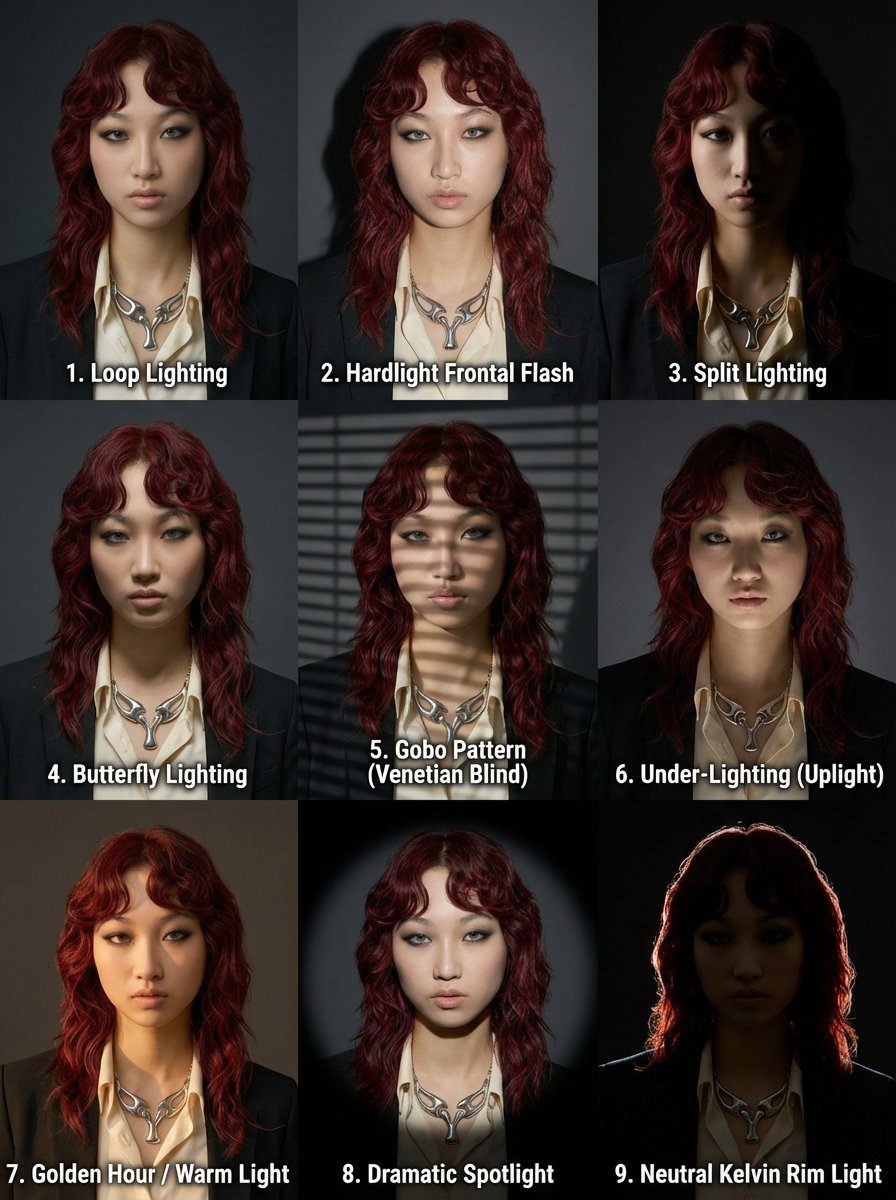
A 3x3 photo grid presented as a single image on a dark grey background. Each of the nine grid cells contains a different portrait of the same subject from the uploaded image, maintaining the perfect character consistency, outfit and pose across all panels. Below each individual portrait, a clean sans-serif text label with a number and name is clearly displayed. The grid layout and lighting setups are: - Top row, left to right: Loop Lighting (Flattering 3/4 light with a small loop of shadow from the nose onto the cheek) Hardlight Frontal Flash (direct front facing, harsh flashlight with deep frontal shadows) Split Lighting (dramatic light on only one side of the face, leaving the other side completely dark) - Middle row, left to right: Butterfly Lighting (classic symmetrical light from the front, slightly high, with a small shadow under the nose) Gobo Pattern (Venetian Blind)' (light projected through Venetian blinds, creating linear shadows across the face and clothes, the shadow can also be scene on the background) Under-Lighting (Uplight)' (light coming from below, creating reverse shadows and a moody look) - Bottom row, left to right: Golden Hour / Warm Light' (bathed in soft, golden, warm light from a side angle) Dramatic Spotlight (hard, narrow circular beam of light, with a deep chiascuro effect and crushed blacks) Neutral Kelvin Rim Light' (intense backlighting with no front fill, creating a distinct glowing outline around the hair and shoulders, leaving the face in darkness, against a black background). The perspective and features remain identical in all panels, with only the specified lighting changing to match the label.

Watercolor Map Generation Prompt

Watercolor Map Generation Prompt

A detailed watercolor-style map of {argument name="country name" default="COUNTRY"} on lightly textured paper, soft flowing washes in distinct harmonious colors for each first-level administrative division, all federal states, provinces or regions accurately separated by clear borders and labeled directly inside their areas in neat blue ballpoint-pen handwriting, educational and infographic-friendly, clean composition, high legibility, subtle paper grain, gentle shading, refined illustrative finish, balanced negative space, no cities, no roads, no flags, no logos, no watermark, bright clean background

Flat UI/Startup Style Illustration Prompt

Flat UI/Startup Style Illustration Prompt

Flat illustration of {argument name="subject" default="[subject]"}, startup-style vector art, bright colors, simple shapes, clean and professional design, white background, no text.

部分提示词收录自 X 平台创作者,版权归原作者所有。