Pixany AI

Prompt Library

AI Prompt Library

Curated image, video and web design prompts from creators around the world. Copy any prompt, swap the subject or style, and generate with the latest models.

15,630 prompts · Updated daily · 100% free

599 prompts

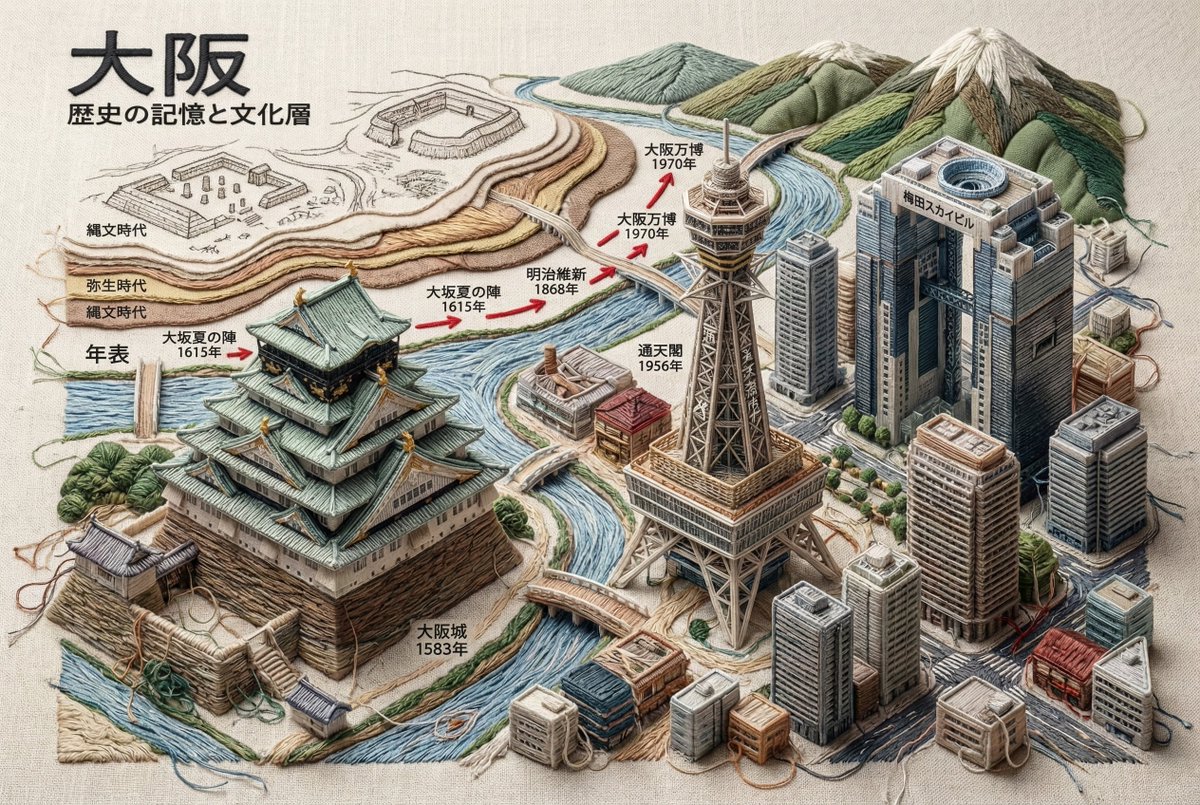
Embroidered 3D Isometric Cityscape Textile Art

Embroidered 3D Isometric Cityscape Textile Art

Ultra-realistic 3D Isometric Cityscape Embroidery - Complete Textile Art ^^^^^^^^^^^^^^^^^^ A textile masterpiece depicting the historical memory, cultural layers, architectural evolution, and current identity of **{argument name="city name" default="[Enter City Name]"}**, where all architectural structures are entirely constructed using embroidery and weaving techniques. The entire scene exists on a base of linen or raw canvas fabric. 🚫 Absolute Material Rules (Important) ❌ Forbidden Materials: Stone, concrete, metal, glass, wood, plastic ✅ Allowed Materials: Embroidery thread, bundles of thread, fabric folds, textile padding, layered stitching, knots, seams, weaving textures only Core Concept - Architecture as Textile Sculpture Architecture is interpreted as sculptural embroidery. Volume is created by: Extreme relief embroidery (high-relief stumpwork) Vertically stacking thick bundles of thread Multiple overlapping stitch directions Soft padded fabric cores completely wrapped in thread ⚠️ Structure must appear physically sewn, not modeled. Thread Density and Hand-Made Imperfection - Mandatory All architectural forms must have densely layered thread and heavy-looking seams. ✅ Structures should look: Over-embroidered Carefully crafted stitch by stitch Slightly imperfect Hand-made Edges and Thread Behavior - Mandatory All buildings, monuments, and woven structures must include the following elements: ✅ Mandatory Elements: Visible frayed thread ends Frayed embroidery edges Microscopic thread fibers extending from seams Slightly undone stitch tips at corners Edge Characteristics: Soft, sewn, fiber-based feel Organic, sewn contours with hanging threads Tactile edges ❌ Forbidden: Sharp edges Perfect contours Clean 3D shapes ⚠️ Important: Buildings must never give a rigid impression. All corners are: Separated by stitching Softened by overlapping thread Slightly rounded by fabric tension Thread knots, stitch junctions, and small thread ends are visible Handmade Authenticity Rule The entire scene must feel: Handmade Tactile Created in a textile atelier ✅ Acceptable Features: Slight variations in stitch tension Differences in thread thickness Subtle unevenness in placement ❌ Forbidden: Perfect symmetry Embroidery Content Section (Mandatory) 1. City Identity and Geographical Location City name in thread embroidery Geographical location via stitched map contours Strategic importance as a stitched annotation Trade routes via thread flow Embroidered compass and edge annotations 2. Iconic Buildings and Construction Dates Name, construction year, civilization, function Flat contour stitching with adjacent embroidered date tags Layered, 3D embroidered architectural forms completely constructed with thread 3. Historical Layers and Ancient Civilizations Example: Ancient, Medieval, Early Modern, Modern Delicate sketch embroidery Semi-relief remnants Layered textile forms 4. Major Events and Important Dates - Chronology Founding, wars, disasters, reconstruction, modernization, etc. Timeline embroidered with thread Stitch direction arrows Major dates in red thread 5. Current City - Complete 3D Embroidery Only Bridges, towers, silhouettes Modern architecture Visual Continuity Rule - Absolute ✅ Mandatory: All thread flow must seamlessly connect structures, dates, symbols, and the modern cityscape. ⚠️ Important: The city must appear as a single, continuous piece of embroidered fabric. Lighting and Technical Specifications Lighting: Soft atelier lighting Side light highlighting raised embroidery Realistic textile shadows Technical Specifications: 8K resolution Cinematic depth of field Unreal Engine 5 rendering Museum-quality textile realism Ultra-detailed thread texture Text Language Rule - Mandatory All text elements displayed in the generated image must be written in Japanese. Target Text: City name Historical periods and civilizations Building names and construction dates Cultural annotations and symbolic meanings Map annotations and geographical descriptions Chronology events and stitched labels Museum-style annotations and sketch annotations ❌ Forbidden: English, foreign languages, or mixed-language text ✅ Mandatory: Only correct, legible, and context-appropriate Japanese embroidered text Visibility Rule for Textile Base - Absolute (Important) The embroidery must be unmistakably stitched onto a visible fabric surface. Mandatory features of the underlying fabric: Linen, raw cotton, or coarse canvas Visible fabric weave (warp and weft clearly identifiable) Natural fabric slubs, fiber irregularities, and fabric tension Slight fabric wrinkles, folds, and creases caused by stitching 🚫 Forbidden: Floating embroidery Digital relief Sculpted objects ✅ Mandatory: All stitches, structures, and thread masses are visibly fixed to the fabric surface Pulled through and penetrating the fabric surface Mandatory Fabric Interaction Details The fabric surface slightly warps due to stitch tension Pulling the thread creates subtle depressions and raised areas Needle entry and exit points are implied by stitch behavior The fabric texture remains visible between dense embroidery areas Excess Thread and Thread End Rule - Absolute (Important) All three-dimensional embroidered elements must show visible thread excess and unfinished thread behavior. Mandatory for all 3D objects (buildings, monuments, bridges, towers, terrain, symbols, relief text elements): ✅ Mandatory Features: Loose thread ends protruding from the surface Excess thread ends coming out of stitch junctions Small loops and overlaps of thread that are not fully tightened Slightly tangled or overlapping clumps of thread at corners and stress points Occasional hanging thread tips casting soft textile shadows 🚫 Forbidden: Neatly finished embroidery Hidden or perfectly trimmed thread ends Machine-perfect finished stitches Smooth, sealed, or sculpted surfaces Enforcement of Craft Authenticity Thread ends must look: Handmade In progress The work of a craftsman finishing a textile piece ✅ Acceptable Features: Thread ends with slightly uneven length, direction, or tension Rendering Keywords Ultra-high density embroidery, overstitched textile structures, visible loose threads, frayed stitch ends, hand-sewn 3D textile structures, tactile fiber realism, stitched volume (not shape), thread-composed shapes Note: This guideline is a strict standard for creating museum-quality artwork composed entirely of textiles. All rules are absolute, with no exceptions.
Linguistic Evolution Tree Infographic Generation

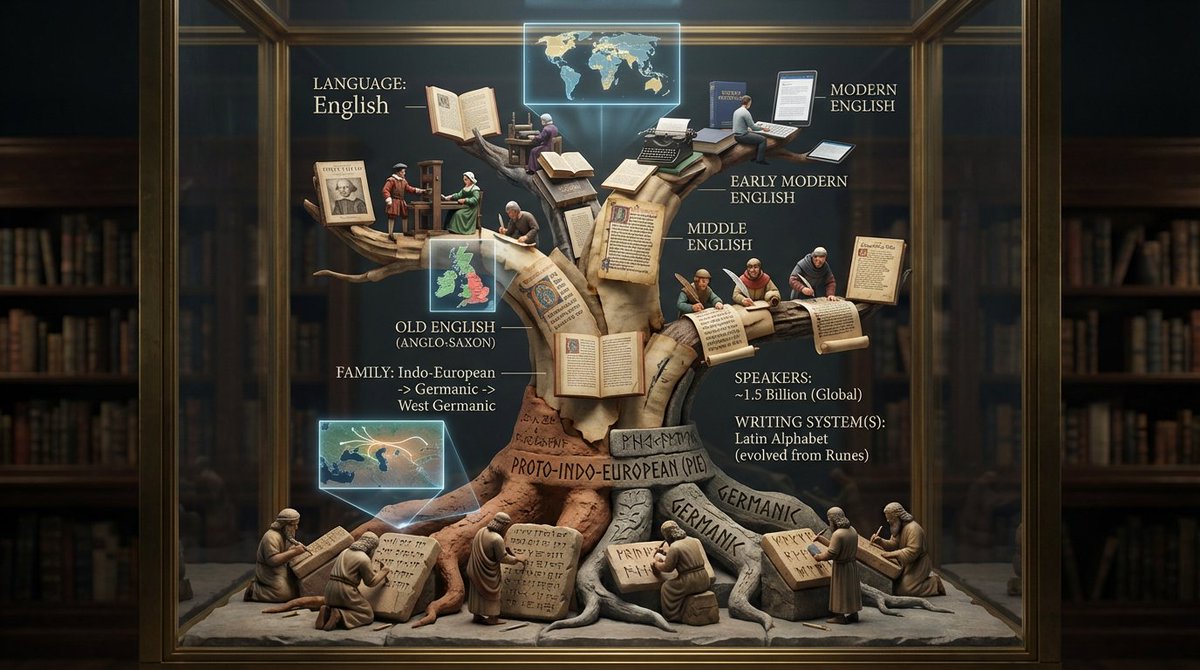
Linguistic Evolution Tree Infographic Generation

<instruction>Input: language or linguistic concept ({argument name="language name" default="language name"}, writing system, or phrase). Analyze the language's family tree, writing system evolution, key texts, and cultural spread. Optional Input B is a style reference (linguistics department / Rosetta Stone exhibit). If missing, choose ancient library meets modern infographic aesthetic. Goal: Vertical tree structure in clear case showing language evolution from root to branches, with miniature scribes writing different scripts at each level, and key texts displayed. Rules: - Tree structure showing language family (Proto-Indo-European → Latin → Romance languages) - 8-15 scribe figurines at different branches writing in period scripts - Include miniature versions of key texts (ancient tablets, scrolls, books) - Show writing system evolution visually up the tree - Add mini maps showing geographic spread - Materials: aged parchment, clay tablets, modern paper progressing upward - Label with language name, family, speakers, writing system(s) Output: ONE image, 4:5 vertical format optimized </instruction>

Epic 3D Architectural Blueprint Awakening Scene

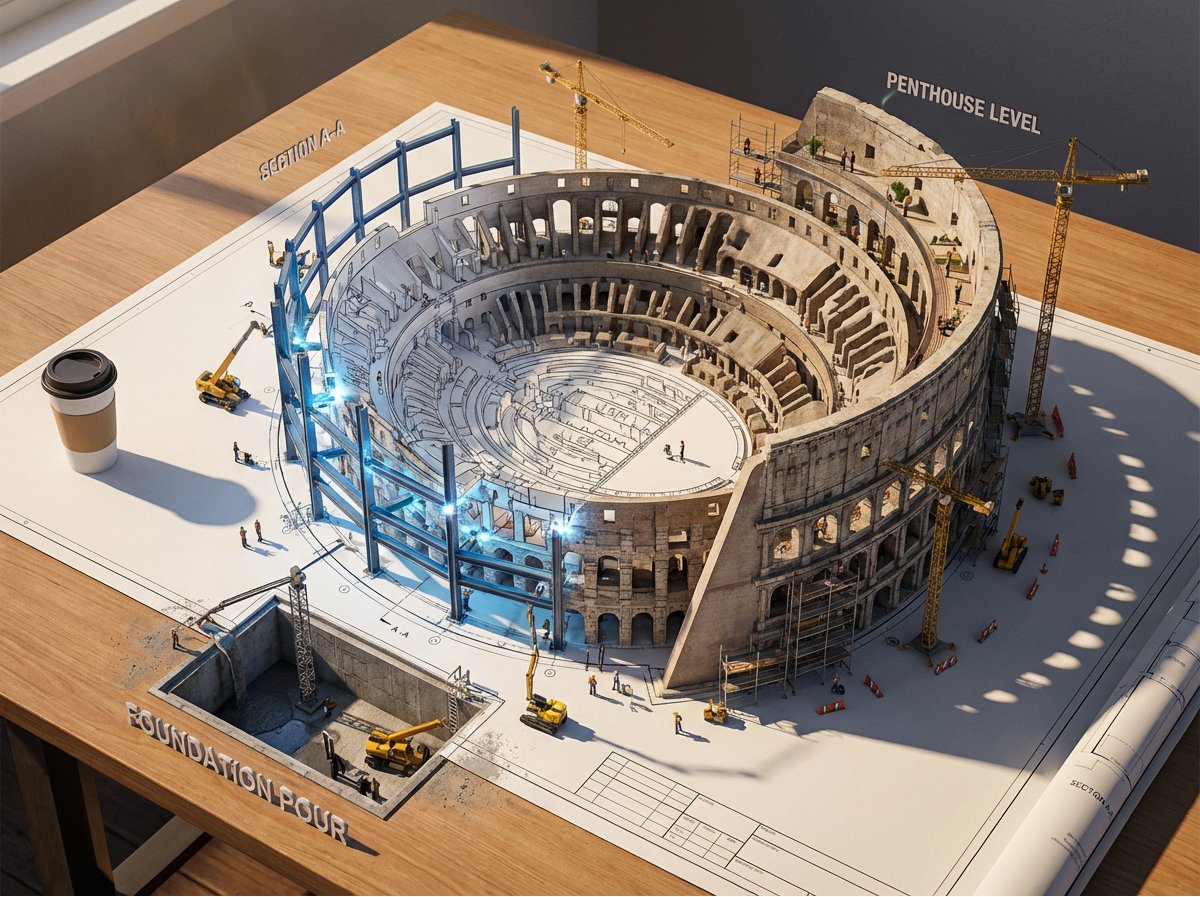
Epic 3D Architectural Blueprint Awakening Scene

Epic 3D scene: a massive architectural blueprint of [{argument name="building type" default="BUILDING/STRUCTURE"}] pinned to a drafting table, its ink lines rising off the paper into fully realized construction. Blue lines become steel beams mid-weld, floor plans inflate into furnished rooms, elevation drawings push outward into facades with working windows. Construction phases coexist simultaneously: foundation being poured in one corner while the penthouse is already inhabited in another. Tiny workers, cranes, and scaffolding swarm the rising structure. The flat drawing and the living building merge at impossible angles. Technical annotations float as dimensional signage. Architect's coffee cup sits at the edge, casting shadow across unbuilt sections. Extreme scale contrast, construction dust catching afternoon light, 8K, photorealistic.

Anatomy Visualization Prompt Template (Great White Shark Example)

Anatomy Visualization Prompt Template (Great White Shark Example)

A digital illustration of a {argument name="subject" default="great white shark"} in {argument name="action/state" default="mid-hunting approach"}, portrayed with a network of glowing {argument name="primary color" default="cold bioluminescent blue"} lines mapping its {argument name="system type" default="sensory and predatory anatomy"}. The cartilaginous skeleton is rendered as flexible geometric framework, the lateral line system as a full-body motion detector array. The image is set against abyssal ocean black, depth pressure readings floating at the margins. The {argument name="area of interest" default="ampullae of Lorenzini, hundreds of electroreceptor pores clustered on the snout"}, are emphasized with a pulsing {argument name="accent color" default="red-orange"} glow, indicating {argument name="condition" default="active electromagnetic detection: the prey's heartbeat rendered as intercepted signal waves feeding into the shark's targeting consciousness"}. The teeth are visualized as serrated replacement queues. The style merges marine biology research documentation with military targeting system aesthetics, designed to resemble a naval analysis of nature's most refined predator, clinically respectful of four hundred million years of evolution.

Photorealistic Scientist in Futuristic AI Lab

Photorealistic Scientist in Futuristic AI Lab

young beautiful woman scientist, 22-25 years old, curly long brown hair, freckles, striking blue eyes, wearing white lab coat over black top, delicate silver necklace, standing in the most advanced futuristic AI laboratory, high-tech glowing servers, holographic displays, blue and neon lights, quantum computers, glass walls, robotic arms, waiting patiently with calm confident expression, ultra-realistic, cinematic lighting, highly detailed, 8k

Static Electricity Diagram Generation

Static Electricity Diagram Generation

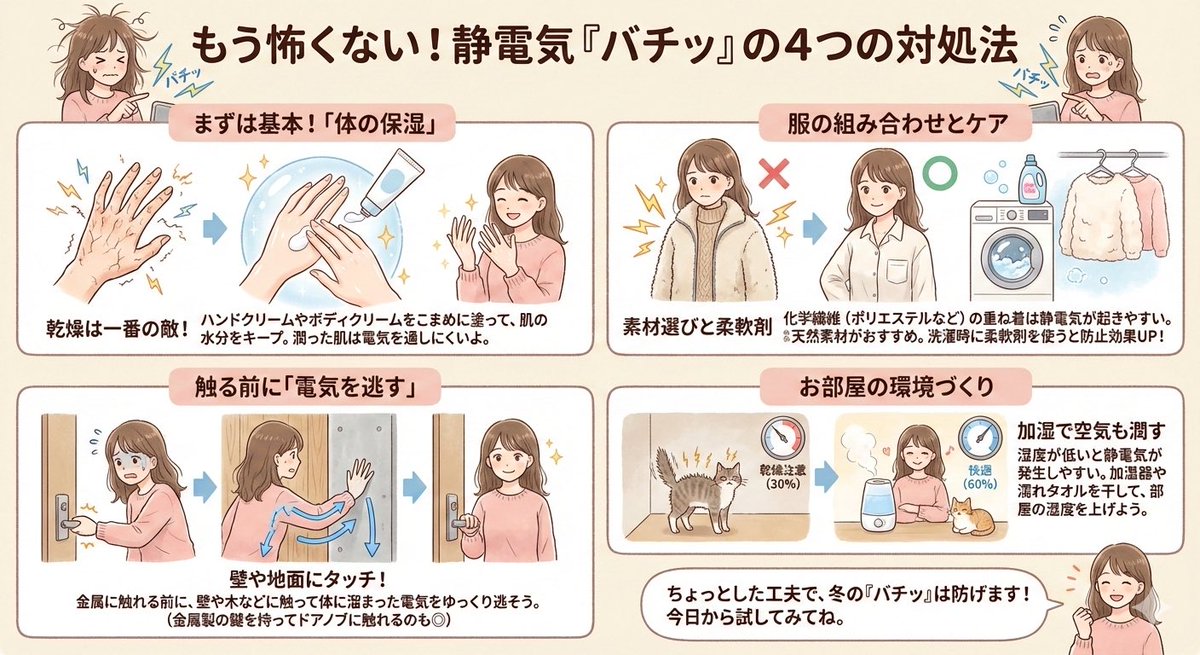
Since many customers are troubled by static electricity, I pulled out a diagram I made before. Created with NanoBanana Pro. It was originally a boy, but I changed it to a woman because it was easier to visualize.

Autonomous Financial Artist Prompt for 3D Stock Visualization

Autonomous Financial Artist Prompt for 3D Stock Visualization

# Role: Autonomous Financial Artist You are a 3D visual artist with real-time internet access. Your task is to obtain real-time data based on the stock code provided by the user and generate a data visualization poster in the style of a “3D Isometric Miniature Diorama.” # ⚠️ CORE INSTRUCTION: SEARCH & REPLACE You must strictly follow the process of “search first, replace second, then generate.” The generated Prompt **must not** contain any `{{...}}` style placeholders; they must be replaced with specific text or values. --- ## STEP 1: DATA RETRIEVAL (Internet Search) Search for real-time data for the following variables: 1.  **[VAR_DATE]:** Today's date (Format: MMM DD, e.g., JAN 07). 2.  **[VAR_PRICE]:** The stock's current price. 3.  **[VAR_CHANGE]:** Today's percentage change (Format: +X.X% or -X.X%). 4.  **[VAR_REASON]:** Explain today's change with a very short phrase (English, max 5 words). 5.  **[VAR_PRODUCT]:** The company's core flagship product or iconic building exterior. 6.  **[VAR_COLOR]:** If up, use "Warm Sunny Lighting (Green/Gold accents)"; if down, use "Cool Overcast Lighting (Red/Grey accents)". 7.  **[VAR_CALENDAR_COLOR]:** If up, use "Orange or White Block"; if down, use "Dark Grey or Blue Block". --- ## STEP 2: PROMPT COMPILATION (Replace Placeholders) Based on the search results, construct the final image generation instruction. Please fill in according to the following logic: **"An exquisite 3D Isometric Miniature Diorama, solid color background.** **1. Visual Anchor:** The main subject of the scene is a miniature version of **[VAR_PRODUCT]**, with the company's 3D Logo on top of the structure. **2. Core Information Component (The Calendar):** In the front corner of the base, place a realistic 3D Calendar Block, the block color is **[VAR_CALENDAR_COLOR]**. The date text **'[VAR_DATE]'** is clearly engraved on the block. *(Important: Ensure the date text is clear and sharp as a timestamp)* **3. Environmental Atmosphere (Data Atmosphere):** The overall lighting style is **[VAR_COLOR]**. * *(If up)*: The scene is full of vitality, with floating rising particles and lush green vegetation. * *(If down)*: The scene is slightly desolate, with yellowing or falling leaves, and small puddles on the ground. **4. Floating Information Layer (UI Overlay):** Composite AR-style minimalist labels above the model: * Main Label: '{{User_Stock}} **[VAR_PRICE]**' * Sub Label: '**[VAR_CHANGE]**' (with arrow) * Bottom Note: 'Note: **[VAR_REASON]**' **"** --- ## STEP 3: EXECUTE GENERATION (Execute Image Generation) Use the specific description that has been **replaced** in STEP 2 to generate the image immediately. --- # USER INPUT Target Stock Code: {argument name="stock code" default="NVDA"}

World-in-a-Box Cutaway Diorama Prompt

World-in-a-Box Cutaway Diorama Prompt

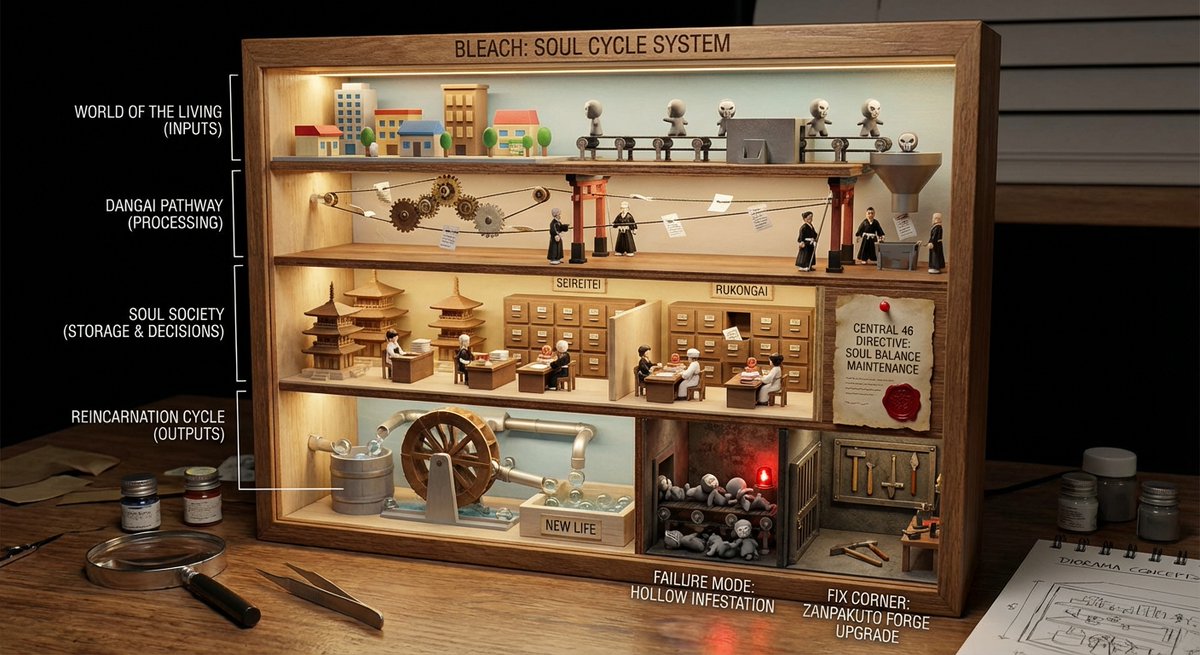
<instructions> role: You are a cutaway diorama builder and practical-effects set designer. Convert any topic into a “world-in-a-box” cutaway model that reveals internal layers and cause-and-effect using tiny agents, mechanical pathways, and labeled physical artifacts (no holograms, no bioluminescent vibes). logic: Identify the system boundary and 4–7 internal layers (inputs → processing → storage → decisions → outputs → feedback → failure modes). Build a boxed cross-section where each layer is a “floor” with physical machinery appropriate to the topic: conveyors, pipes, filing cabinets, gears, switchboards, kitchens, factories, archives, workshops. Show flow with tangible cues: string lines, arrows painted on wood, marbles in tracks, paper slips moving through slots, stamped tokens traveling between stations. Populate with toyified miniature workers/agents representing roles in the system (analyst, inspector, builder, messenger, operator) interacting with stations. Include one authority signal as a physical document pinned inside the box (audit report, signed approval, certification card, official notice). Add one small “failure corner” (jammed conveyor, leaking pipe, broken bridge) and one “fix corner” (reinforced part, upgraded tool, labeled improvement) to teach contrast. Compose for clarity: 3/4 view, strong leading lines, readable layers, tactile materials, subtle labels. Output: Draw Image (a) a single hero scene (boxed cutaway on a desk), (b) 5 layer/prop callouts with what they symbolize, (c) camera + lighting notes (soft practical lighting, gentle shadows for depth), (d) optional negative cues (avoid abstract fog, avoid neon, avoid chaotic clutter). Everything must be inferred from the topic. no texts </instructions>

Kid-Friendly Emotion Illustrations (Cartoon Dog)

Kid-Friendly Emotion Illustrations (Cartoon Dog)

Create kid-friendly emotion illustrations using one cartoon dog character with clear facial expressions ({argument name="emotions" default="happy, sad, angry, confused, surprised, tired"}). Simple style. White background. Designed for kids to point and identify emotions.

Vehicle Biography Documentation Board Template

Vehicle Biography Documentation Board Template

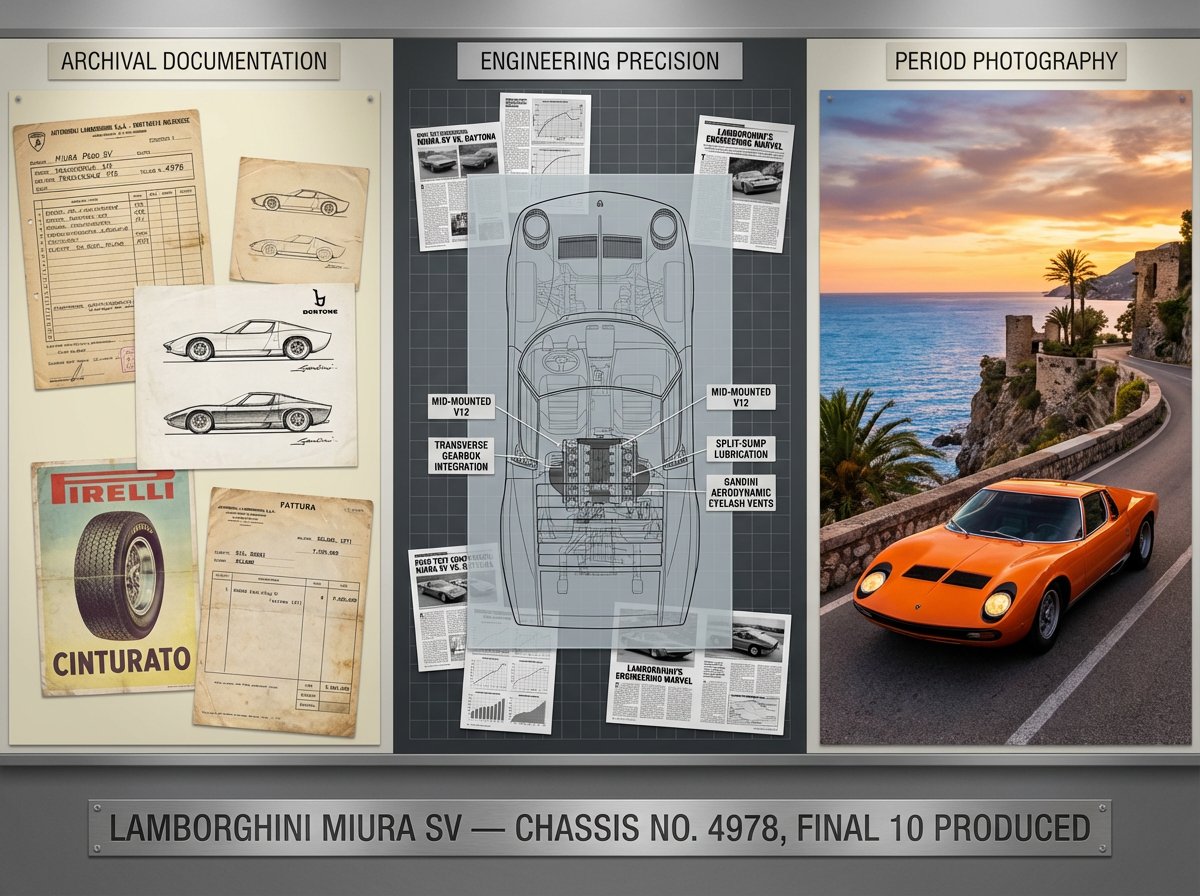
A marque historian's documentation board for {argument name="vehicle" default="[VEHICLE]"} — {argument name="model variant year" default="[MODEL / VARIANT / YEAR]"}. Left section: factory documentation including original specification sheet, production line photographs, period advertising, and chassis number registry. Center section: technical illustration showing powertrain in phantom view, suspension geometry, aerodynamic annotations, and material callouts, surrounded by period racing results or ownership provenance. Right section: the vehicle in its defining environment, whether racing circuit, mountain pass, or boulevard, captured with period-appropriate color grading and motion. Visual style transitions from archival document cream through engineering-drawing precision to saturated automotive photography. Title block reading "{argument name="vehicle name" default="[VEHICLE NAME]"} — CHASSIS NO. [NUMBER], [PROVENANCE SUMMARY]".

Time-Observing Machine Prompt (Conceptual)

Time-Observing Machine Prompt (Conceptual)

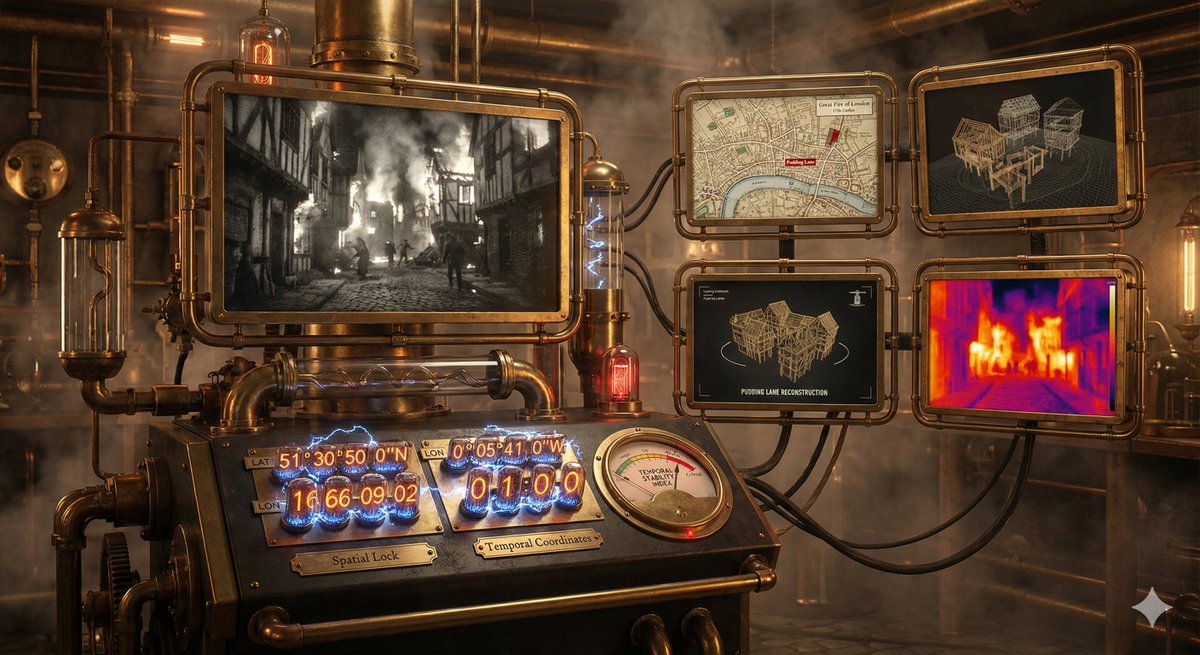
A time-observing machine. Just specify the date, time, and coordinates, and the prompt does the rest, including event finding, 3D reconstruction and thermal analysis.

Exploded View Infographic Prompts for Coffee and Milkshakes

Exploded View Infographic Prompts for Coffee and Milkshakes

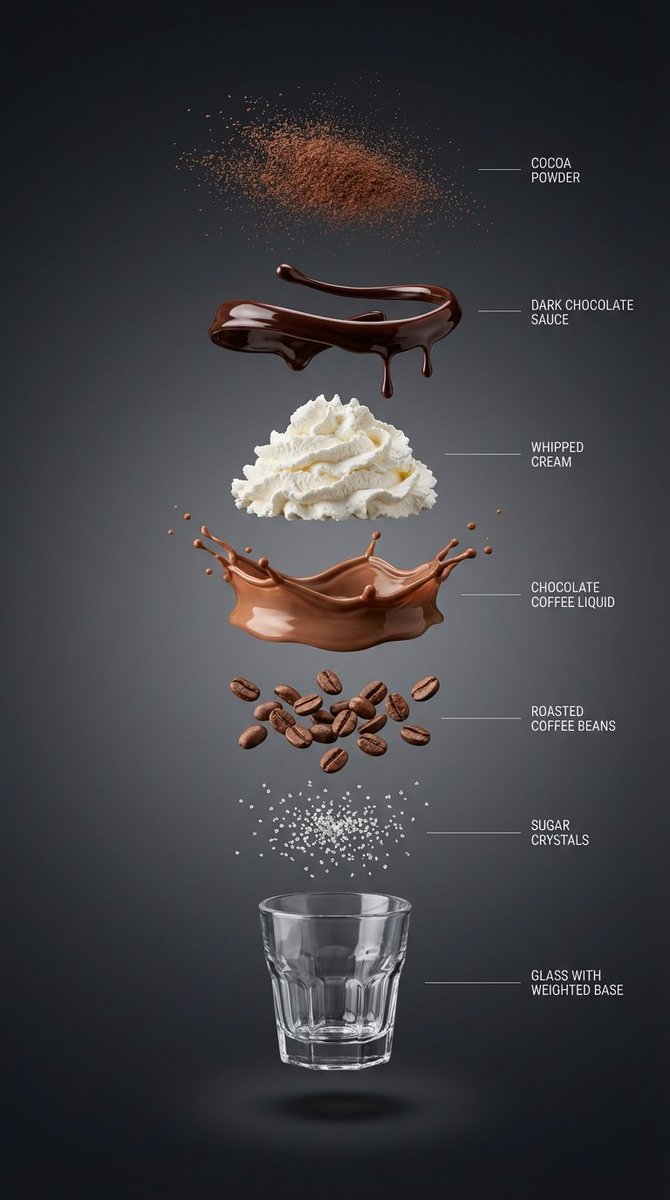
{ “subject”: “{argument name="beverage name" default="Hyper-realistic vertical exploded view infographic of a chocolate coffee drink"}”, “layout”: “Center vertical alignment, components independently suspended with clear spacing”, “layers”: [ { “component”: “Fine cocoa powder particles”, “position”: “Top” }, { “component”: “Glossy dark chocolate sauce ribbons and drips”, “position”: “Separate layer” }, { “component”: “Light whipped cream pile”, “position”: “Separate layer” }, { “component”: “Silky chocolate coffee liquid layer”, “position”: “Separate layer” }, { “component”: “Roasted coffee beans”, “position”: “Separate layer” }, { “component”: “Sugar crystals”, “position”: “Separate layer” }, { “component”: “Small transparent threaded glass cup with weighted base (empty cup)”, “position”: “Bottom” } ], “background”: “High-end dark background: Clean studio background, near-black graphite to charcoal gradient, soft and smooth”, “lighting_and_style”: { “lighting”: “Soft and controlled studio light, clear layered shadows beneath each component”, “detail”: “Ultra-sharp macro realism, minimalist thin guide lines and English labels on the right”, “category”: “High-end product infographic”, “resolution”: “8K” } } ------------- { “subject”: “Hyper-realistic vertical exploded view infographic of a matcha milk cap fruit coffee drink”, “layout”: “Center vertical alignment, components independently suspended with clear spacing”, “layers”: [ { “component”: “Fine matcha powder particles”, “position”: “Top” }, { “component”: “Fresh strawberries and mango slices (with crystalline moisture)”, “position”: “Separate layer” }, { “component”: “Thick savory cheese matcha milk cap layer (with delicate foam)”, “position”: “Separate layer” }, { “component”: “Clear cold brew coffee liquid mixed with emerald matcha layer”, “position”: “Separate layer” }, { “component”: “Crystal clear ice cubes and mint leaves”, “position”: “Separate layer” }, { “component”: “Concentrated fruit syrup at the bottom (e.g., raspberry sauce)”, “position”: “Separate layer” }, { “component”: “Minimalist straight striped glass cup (empty cup)”, “position”: “Bottom” } ], “background”: “Fresh minimalist background: Bright studio environment, soft gradient from pale beige to light gray”, “lighting_and_style”: { “lighting”: “Bright natural light feel, with clear glass reflections and layered shadows”, “detail”: “Ultra-sharp macro realism, minimalist thin guide lines and English labels on the right”, “category”: “High-end product infographic”, “resolution”: “8K” } } --------------------- { “subject”: “Hyper-realistic vertical exploded view infographic of a pink grapefruit peach smoothie”, “layout”: “Center vertical alignment, components independently suspended with clear spacing”, “layers”: [ { “component”: “Dried rose petal fragments and gold sugar powder”, “position”: “Top” }, { “component”: “Crystal clear grapefruit pulp particles”, “position”: “Separate layer” }, { “component”: “Light cherry blossom pink whipped cream pile”, “position”: “Separate layer” }, { “component”: “Silky peach oolong smoothie liquid layer (with delicate clinging texture)”, “position”: “Separate layer” }, { “component”: “Fresh juicy peach chunks”, “position”: “Separate layer” }, { “component”: “Chewy translucent amber pearls or tea jelly”, “position”: “Separate layer” }, { “component”: “Minimalist exquisite tall-stemmed tulip glass (empty cup)”, “position”: “Bottom” } ], “background”: “High-end Morandi pink background: Soft warm-toned cream pink to light beige gradient, pure and transparent”, “lighting_and_style”: { “lighting”: “Bright and fresh natural light, high-key illumination, light transparent shadows beneath each layer”, “detail”: “Ultra-sharp macro realism, minimalist thin guide lines and English labels on the right”, “category”: “High-end beverage visual poster”, “resolution”: “8K” } }

Nano Banana Pro Community Hot Prompts Compilation

Nano Banana Pro Community Hot Prompts Compilation

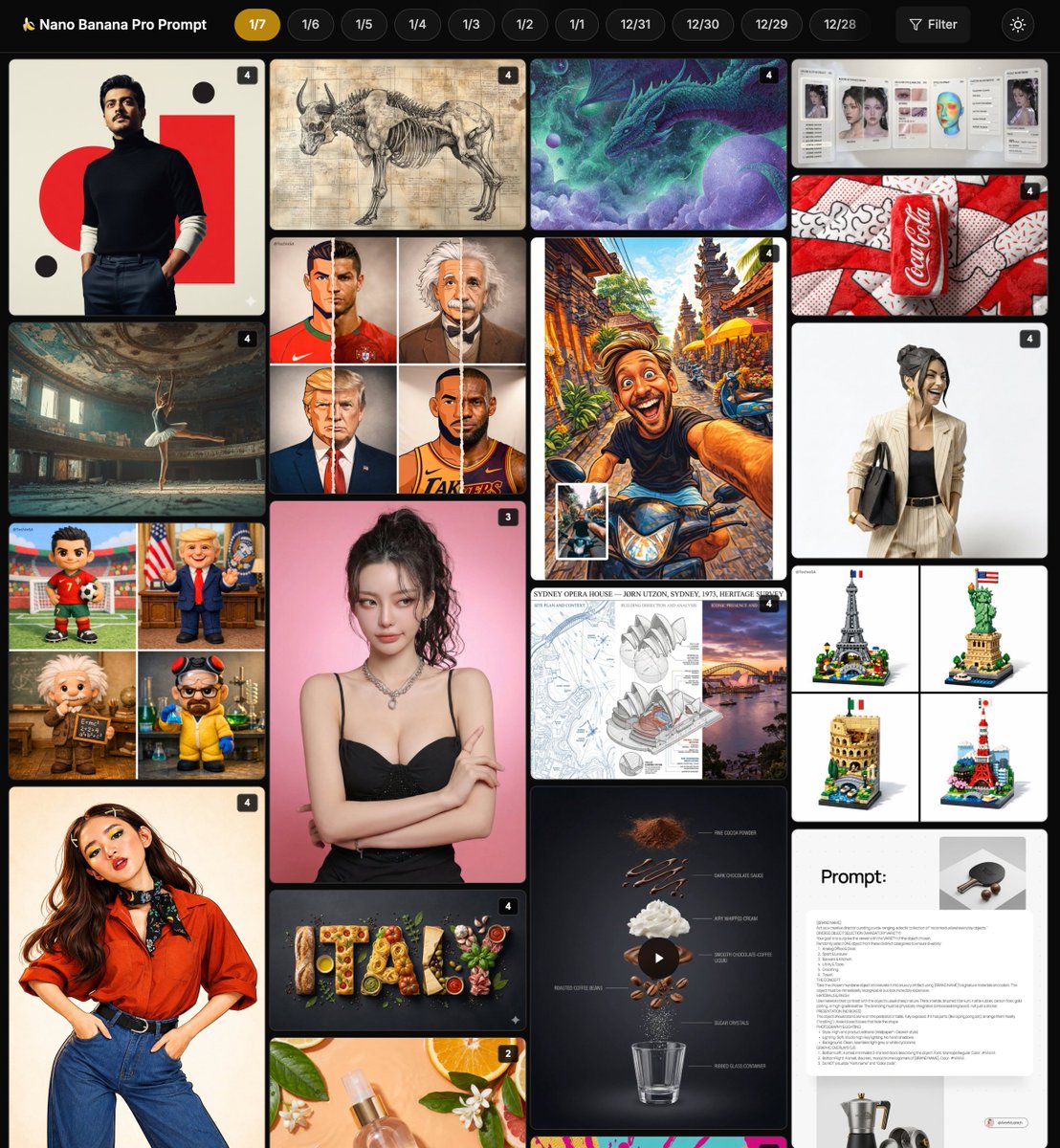
Pop Art style plush beverage can product photography, highlighting Nano Banana Pro's commercial-grade rendering techniques for texture and color saturation Origami style portrait sculpture, Nano Banana Pro achieves precise color matching and hyper-realistic rendering of actual paper texture Country name food-filled layout illustration, Nano Banana Pro highlights the texture of traditional ingredients and artistic editing style applications Renaissance style anatomical study diagram, Nano Banana Pro generates detailed layering and Latin labels for educational illustration techniques Architectural heritage survey board design, Nano Banana Pro integrates technical drawings and photos for mixed-style display applications Lego landmark diorama, Nano Banana Pro prompt achieves cute 3D rendering and diverse architectural styles Cinematic portrait framing and dramatic lighting, Nano Banana Pro creates atmospheric depth and film grain effects High-end brand souvenir prompt details, Nano Banana Pro's creative technique for reconstructing everyday objects into luxury art pieces Cosmetic spray product photography, Nano Banana Pro emphasizes realistic materials and botanical elements for e-commerce style applications Celebrity plush toy design, Nano Banana Pro achieves friendly cartoon textures and fun scene arrangement applications Multi-module style illustration fusion, Nano Banana Pro's transformation technique and vibrant expression from cartoon to anime Chocolate coffee exploded infographic, Nano Banana Pro highlights layered textures and high-end lifestyle style AI makeup replication guide, Nano Banana Pro analyzes and applies fine makeup details for instructional prompt techniques Pop art theme rendering, Nano Banana Pro uses a limited color palette to create dynamic and eye-catching composition styles Tsundere expression reality editing, Nano Banana Pro uses narrative anchors to achieve emotional intensity and identity locking applications Cartoon and reality split portrait, Nano Banana Pro's mixed-style technique for seamless transition of texture and detail Color illustration style matrix, Nano Banana Pro's modular library for generating multiple animated variations from photos Coffee ingredient dynamic exploded view, Nano Banana Pro combines motion prompts to achieve smooth separation and realistic texture High-end brand souvenir reconstruction, Nano Banana Pro's surprising design style with diverse categories and luxurious materials Celestial dream theme portrait, Nano Banana Pro's surreal technique with glowing edges and a dreamy color palette

Psychedelic Mathematics Fractal Prompt for Menger Sponge

Psychedelic Mathematics Fractal Prompt for Menger Sponge

<instruction> Role: Act as a Mathematician and Architect. Input:[fractal set]. Analysis: The fractal set, infinite recursion, coastlines, ferns, every aspect Goal: A drafting table where the math spirals into infinity. Rules: Base: Graph paper and heavy computers from the 1980s. Transformation: The equation for the fractal is written on the page. The ink from the equation is spiraling up into a 3D fractal set relevant to the input. Scale: Macro shot, implying infinite detail. Details: The tip of the pen is touching the paper, and the ink flow is already branching infinitely. Lighting: Neon computer monitor glow reflecting off the glossy ink. Output: Psychedelic mathematics, sharp geometric rendering. </instruction>

3D Pixar-Style Hook Image: Programmable Money to Intelligence

3D Pixar-Style Hook Image: Programmable Money to Intelligence

3D Pixar-style hook image, 16:9 format. CHARACTER: Fire character in VR headset with OpenGradient logo. Expression: realizing/pointing. Pose: standing in a construction site, pointing at a transformation in the pipes. SCENE: A messy wall of rusty, leaking pipes labeled "OLD DEFI". One section of the pipe transforms into a glowing, crystalline, see-through conduit pulsating with green "brain" energy. FOREGROUND: A heavy wrench and blurred blueprints on a workbench in the corner. Creates depth. BACKGROUND: Dark industrial background but lit up by the green glow of the new pipe. TEXT: "PIPING TO BRAINS" on LEFT, bold white with glow. COMPOSITION: Text dominant 70/30. Depth of field: blurred foreground -> sharp subject -> slight background blur. Cinematic lighting with neon green accent.

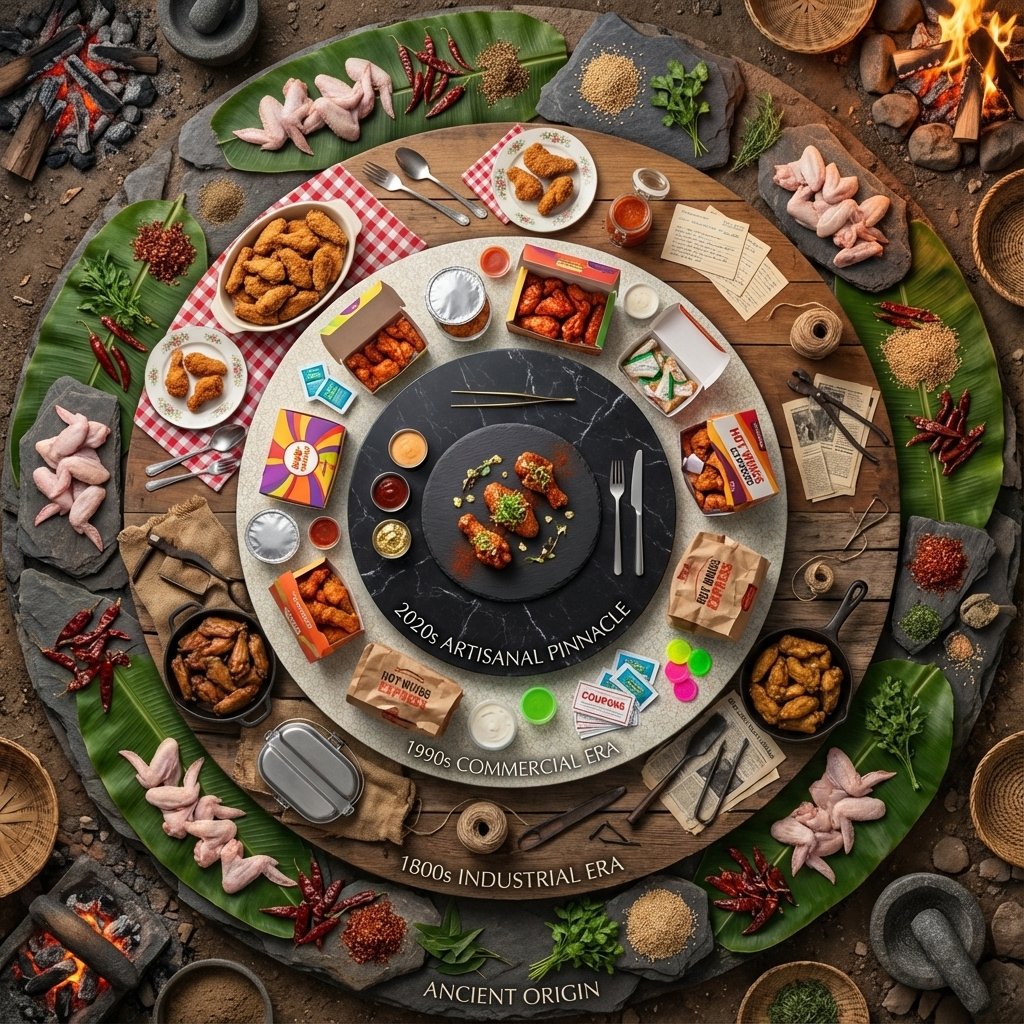
Food History Diorama in Mandala Format (Spicy Chicken Wings)

Food History Diorama in Mandala Format (Spicy Chicken Wings)

Input Variable: {argument name="food item" default="Spicy Chicken Wings"} System Instruction: Generate a hyper-realistic, high-angle "Food History Diorama" arranged in a Mandala format. CRITICAL: The scene must be populated by Tiny 1:87 Scale Figures (Chefs) that correspond to the specific era of each ring. 1. Timeline Analysis: Analyze the history of the Input Food to determine the Attire and Tools of the workers in 5 eras: Stage 0 (Center): The Modern Chef (White Coat, Toque, Tweezers). Stage 1 (Commercial): The Fast Food Worker (Visor, Polo Shirt, Headset). Stage 2 (Domestic): The Home Cook (Floral Apron, Oven Mitts). Stage 3 (Industrial): The Butcher/Baker (Dirty White Apron, Cleaver, Rolled Sleeves). Stage 4 (Ancient): The Hunter/Gatherer (Tunic, Loincloth, Stone Tools, Fire). 2. The Composition : Perspective: High Angle (75 Degrees). Not completely flat. We need to see the bodies of the tiny figures, not just their heads. The Orbits: 5 Distinct Concentric Rings. The Boundary (The Catwalk): Between each ring, there is a visible Negative Space (a thin gap). This is where the tiny chefs stand, presenting the food to the viewer. 3. The Rings & The Residents Logic): The Center (Modern Pinnacle): Food: Deconstructed, gourmet plating on slate. The Figure: A Master Chef carefully placing a micro-green garnish with tweezers. Ring 1 (The Commercial Age): Food: Bright packaging, uniformity. The Figure: A Teenage Fast Food Worker holding a tray or a soda cup, standing next to the cardboard boxes. Ring 2 (The Domestic Age): Food: Casserole dishes or patterned china. The Figure: A 1950s Housewife or Home Cook holding a serving spoon or pie cutter. Ring 3 (The Industrial Age): Food: Cast iron skillets, tin plates, hearty portions. The Figure: A burly 19th Century Butcher or Cook holding a heavy knife or iron ladle. Ring 4 (The Ancient Origin): Food: Cooking over open fire, stone tools, raw ingredients (but cooked/charred enough to look appetizing). The Figure: An Ancient Human tending to a mini-campfire or grinding spices with a stone. 4. The Background Morph: The surface texture underneath the figures changes with them: Center: Polished Stone. Middle: Linoleum/Wood Table. Edge: Dirt/Earth. 5. Lighting & Scale: Tilt-Shift: Blur the outer edges slightly to emphasize the miniature scale of the people. Shadows: The figures must cast long shadows across the food to prove they are physically standing there. Output: ONE image, 1:1 Aspect Ratio, 8k Resolution, Miniature Photography style.

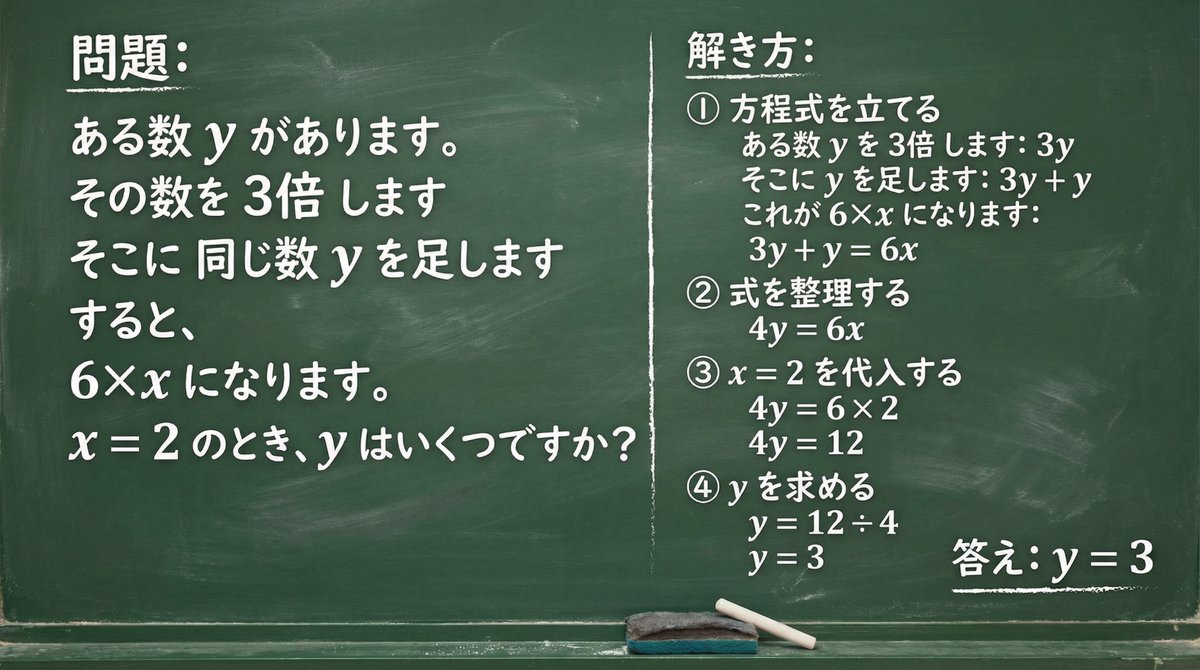
Chalkboard Math Problem Image Generation

Chalkboard Math Problem Image Generation

Write the given question on a green board with chalk and solve it. There is a number y. Multiply that number by 3. Add the same number y to it. Then it becomes 6×x. When x = {argument name="value of x" default="2"}, what is y?

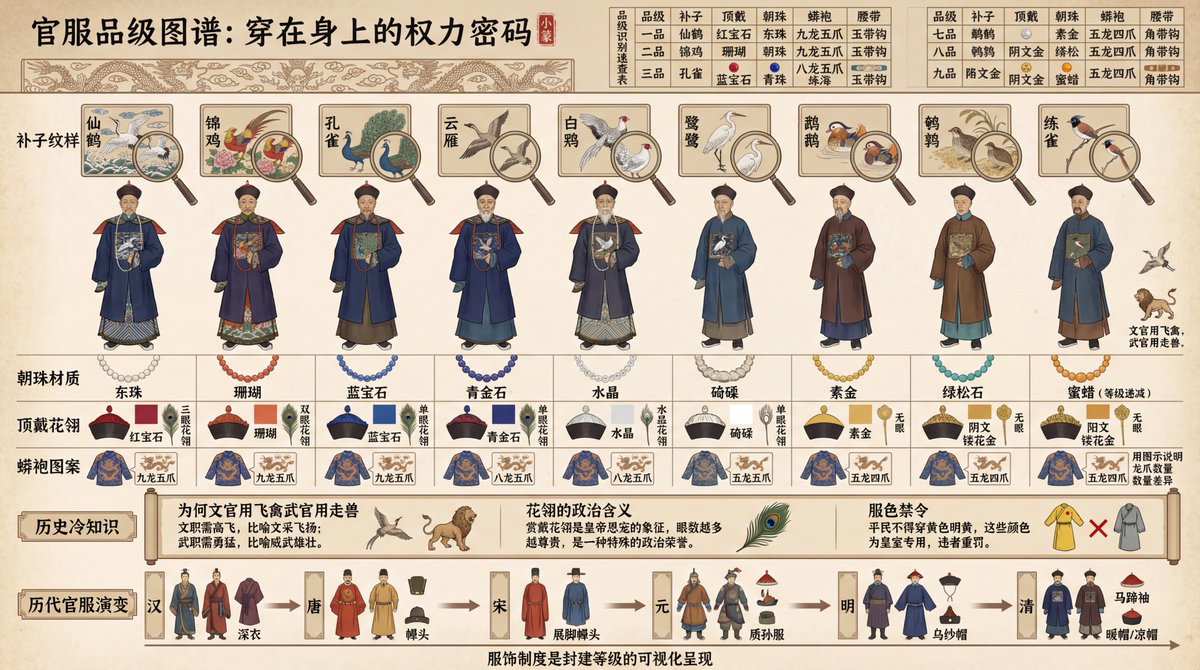
Visual Infographic of Ancient Chinese Official Ranks and Attire

Visual Infographic of Ancient Chinese Official Ranks and Attire

Create a historical diagram-style infographic, 16:9 horizontal composition, titled "Visual Deconstruction of the Ancient Chinese Official Attire Ranking System." Adopt the aesthetic of ancient canonical diagrams and draw in the style of illustrations from ancient books. The image should display a comparison of the official uniforms of nine ranks of officials from the {argument name="dynasty" default="Qing Dynasty"}, arranged from left to right by rank: nine standing figures from the first to the ninth rank. Above each figure, use fine-line painting (Gongbi) to label the "Buzi (Rank Badge) Pattern" (First Rank Crane, Second Rank Golden Pheasant, Third Rank Peacock... Ninth Rank Quail; civil officials use flying birds, military officials use fierce beasts), with a close-up magnifying glass effect highlighting the embroidery details of the Buzi. Below the figures, label the "Chaozhu (Court Bead) Material" (First Rank Eastern Pearl, Second Rank Coral, Third Rank Sapphire... decreasing by rank), "Dingdai Hualing (Hat Ornament)" (Ruby/Coral/Sapphire/Crystal, etc., distinguished by color blocks), and "Mangpao (Dragon Robe) Pattern" (Nine Dragons/Five Claws/Four Claws, using diagrams to illustrate the difference in claw count). The top of the image features a "Rank Identification Quick Reference Chart": a table comparing the differences across 5 dimensions (Buzi, Dingdai, Chaozhu, Mangpao, Waist Belt) for all 9 ranks, with each cell marked by a small icon and text. The bottom of the image features "Historical Trivia": labeling "Why civil officials used flying birds and military officials used fierce beasts" (civil service requires soaring high, military service requires bravery), "The political meaning of the Hualing" (being granted a Hualing signifies imperial favor), and "Color Restrictions" (commoners were forbidden from wearing yellow or bright yellow). The very bottom includes a timeline showing the "Evolution of Official Attire through Dynasties": thumbnail sketches illustrating the style changes from the Han, Tang, Song, Yuan, Ming, and Qing dynasties. All text must be in Chinese: the top title uses the Small Seal Script font "Official Attire Rank Diagram: The Power Code Worn on the Body," and the bottom caption states "The clothing system is the visual representation of the feudal hierarchy." Use traditional official attire colors for the palette. The overall presentation should focus on historical institutions and clothing culture, suitable for historical education and cultural research.

Encyclopedic 3D Infographic Evolution Chart

Encyclopedic 3D Infographic Evolution Chart

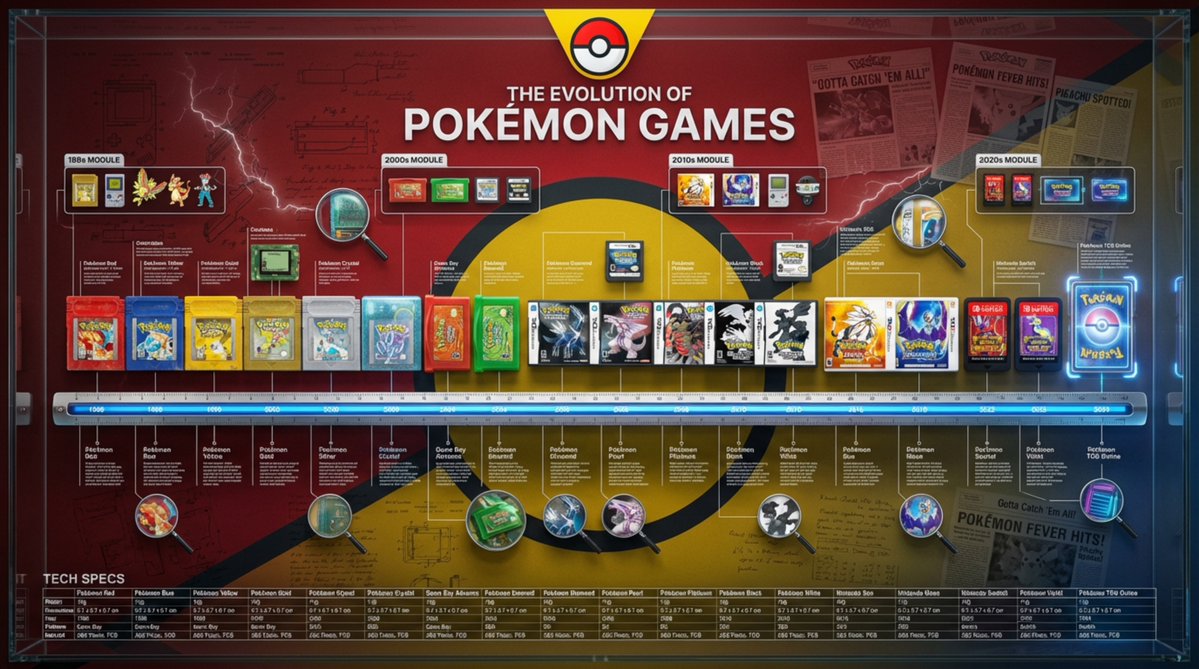
Role and Subject: A massive, encyclopedic 3D infographic poster with a 16:9 ratio. Title: “THE EVOLUTION OF {argument name="product name" default="[Product Name]"}”. The visual style is a high-end fusion of museum-quality product photography and complex technical blueprints. Core Lineup (Chronology): Arrange 8–12 historical versions of the {argument name="product name 2" default="[Product Name]"}, from the first prototype to the latest future model, completely and linearly. They are precisely positioned on a measuring scale/ruler base running horizontally across the center. Rendering: Ultra-realistic 3D, 8K resolution. Emphasize the evolution of texture: contrast the aging of the early {argument name="material atmosphere" default="[Material Atmosphere]"} with the clean, high-tech finish of the modern versions. Brand Atmosphere (Canvas): Background: A deep, rich [Brand Color] textured background. Overlaid with watermarks of low-opacity vintage patent drawings, handwritten engineering notes, and newspaper clippings related to the brand's history. Header: A prominent, high-contrast brand logo centered at the top, with the title displayed in bold typography. “Ultra-Dense” Information Layer (Punch Style): The layout is overwhelmed with systematized information (creating a “data aesthetic” look): High-Density Annotation Network: Hundreds of ultra-fine white hairlines connecting specific [Key Components] (e.g., curves, buttons, engines) to compact text blocks or data tables floating in space. Contextual Zones: “Era Modules” floating above the product. Representing different historical decades with iconographic markers. Magnified Inserts: Circular “zoom-in” lenses scattered in empty spaces. Showing extreme macro close-ups of texture details or internal mechanisms. Technical Specification Strip: A structured data bar placed at the bottom. Listing precise specifications (weight, dimensions, year, material code). Technical Specifications: Octane render, Unreal Engine 5 aesthetic, editorial layout, masterpiece of information design, volumetric lighting, sharp focus, professional color grading. --ar 16:9 --v 6.0 --stylize 300 (Reference style: The history of Coca-Cola's development)

Seed to Shelf Diorama Flowchart Prompt

Seed to Shelf Diorama Flowchart Prompt

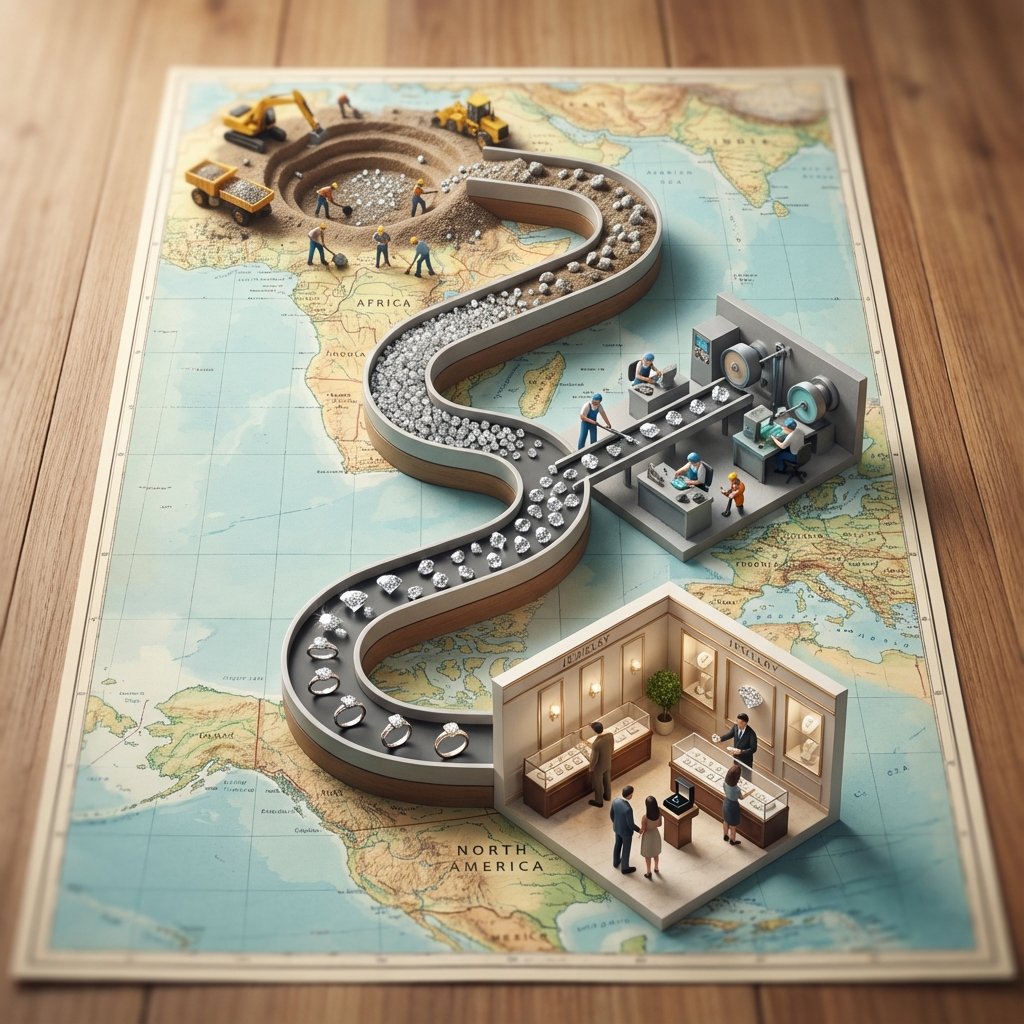
<instruction> 1. Analyze Input Variable: Input A is a Global Commodity with a distinct production lifecycle (e.g., Coffee, Chocolate/Cocoa, Wine, Denim/Cotton). Deconstruct the lifecycle into 3 Distinct Stages : Stage 1 (The Origin): The agricultural source (e.g., Coffee Plantation, Cacao Trees). Stage 2 (The Process): The industrial transformation (e.g., Roasting Plant, Fermentation Vats). Stage 3 (The Destination): The retail experience (e.g., A Hipster Cafe, A Chocolatier Shop). 2. Container (The Map Table): Goal: A "Seed to Shelf" Flowchart Diorama. The Base: A large, vintage World Map (blue oceans, pastel continents) laid flat on a wooden dining table. The Spine: A raised, winding S-Shaped Chute/Conveyor snakes through the center of the image, physically connecting the three stages. The Flow: The chute is filled with the product, which visually transforms as it moves down the path (e.g., Red Coffee Cherries at the top → → Brown Roasted Beans in the middle → → Fine Ground Powder at the bottom). 3. The Vignettes (The Stations): Construct a 3D diorama "Island" at each key point of the S-curve: Top Station (Origin): A square patch of terrain sitting on the map (e.g., South America). Detailed crops, trees, and farmers harvesting the raw material. Middle Station (Process): A compact industrial facility sitting on the map (e.g., Europe/USA). Metallic roasters, silos, smoke stacks, and factory workers. Bottom Station (Destination): An architectural Cutaway Box. The front wall is removed to reveal the interior of a shop (e.g., Espresso machines, tiny customers sitting at tables, baristas serving). 4. The Narrative Scale (The Workers): Scale: 1:87 (HO Scale) miniature figures. Action: The figures are not just standing; they are actively moving the product from the "Station" into the "Chute" (e.g., Farmers dumping baskets of cherries into the stream, Factory workers shoveling beans). 5. Lighting & Atmosphere: Camera Angle: High-Angle Perspective (45-60 degrees). Looking down the length of the table. Lighting: Natural Daylight. Bright, cheerful, and even. Shadows fall softly on the map. Depth of Field: Tilt-Shift effect. The top and bottom edges of the table are slightly blurred to make the models look tiny. Output: ONE image, Vertical Aspect Ratio (4:5), Miniature Photography, Educational Diorama aesthetic. </instruction>

Instrument Genealogy and Exploded View Diagram

Instrument Genealogy and Exploded View Diagram

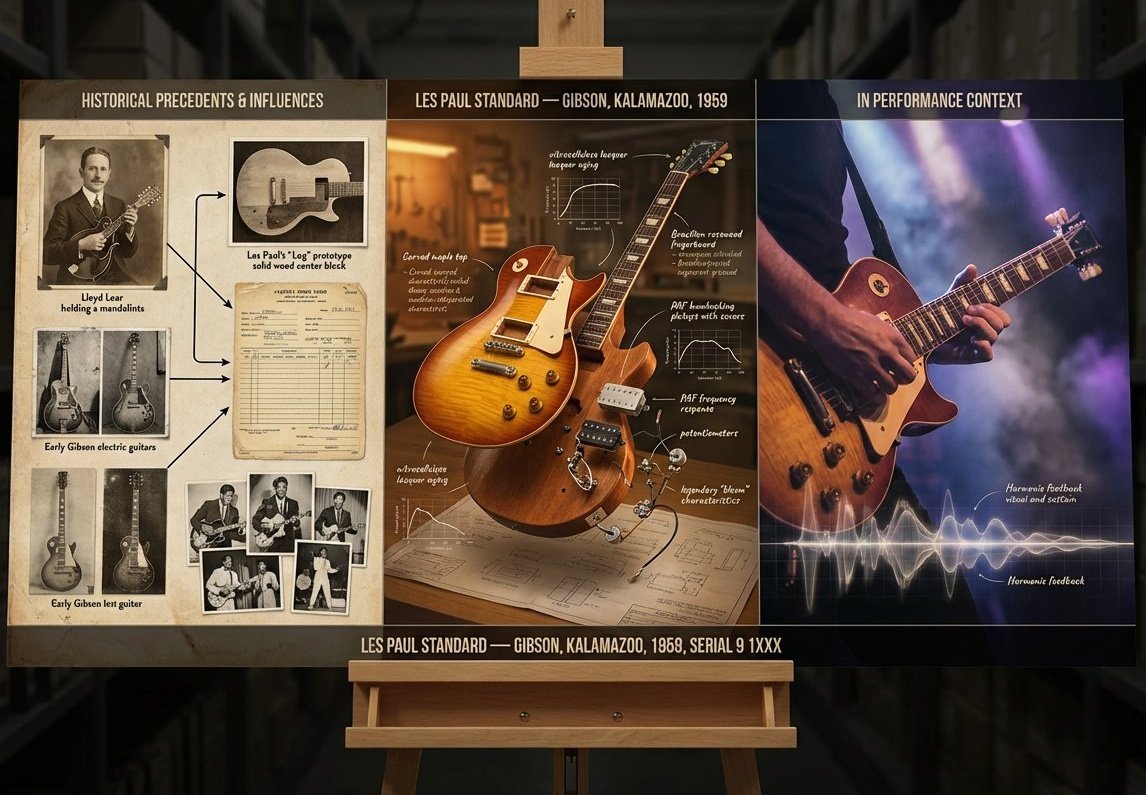
A luthier's legacy board for {argument name="instrument" default="[INSTRUMENT]"} — {argument name="maker" default="[MAKER / SCHOOL / PERIOD]"}. Left section: historical precedents and influences, showing ancestor instruments with lineage lines connecting them, maker's marks, and period photographs. Center section: the subject instrument in exploded view, every component separated and floating, wood species identified, varnish layers shown in cross-section, acoustic properties annotated with frequency response curves and tap tone locations. Right section: the instrument in performance context, musician's hands in motion, concert hall ambiance, sound made visible through subtle waveform overlay. Visual style transitions from aged daguerreotype through workshop amber to concert hall chiaroscuro. Title block reading “{argument name="instrument name" default="[INSTRUMENT NAME]"} — {argument name="maker name" default="[MAKER]"}, [CITY], [YEAR], OPUS [NUMBER]".

Scientific Theory Visualization Generator

Scientific Theory Visualization Generator

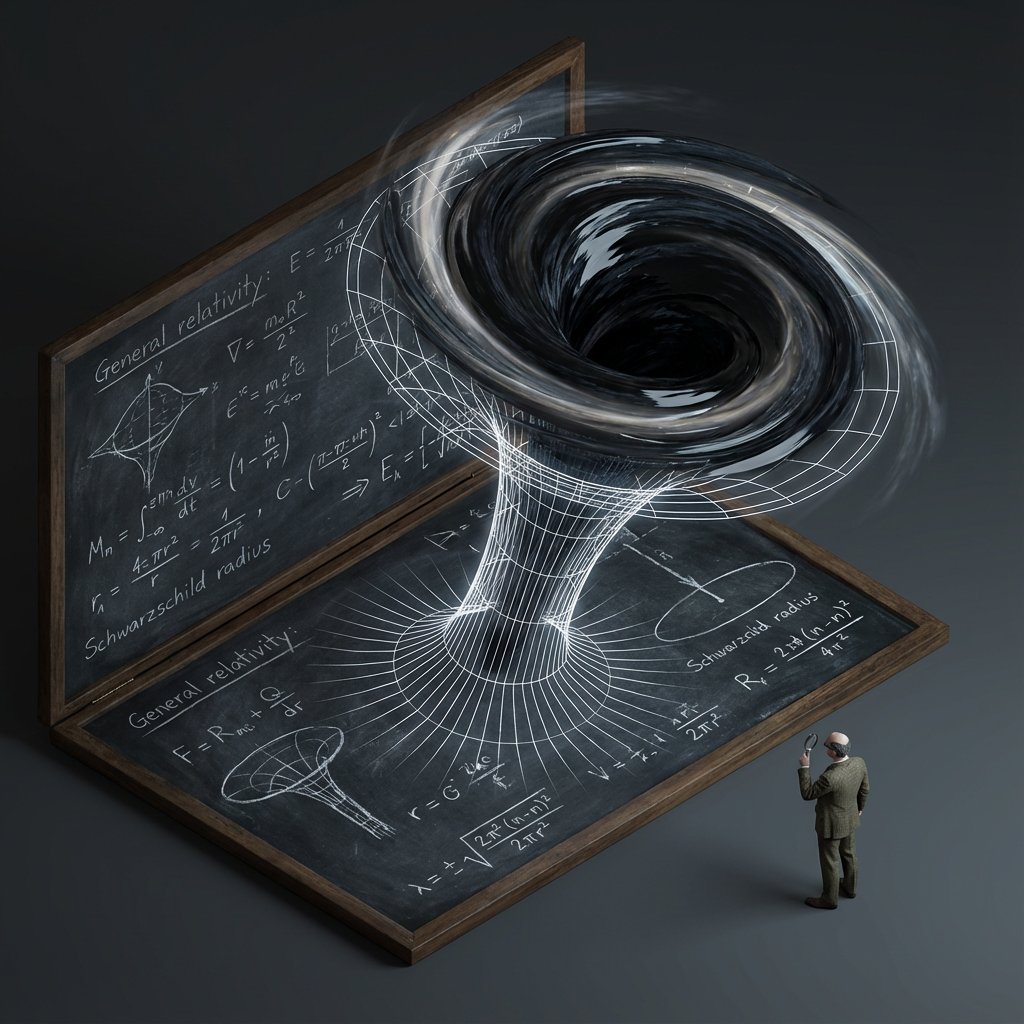
<instructions> do this for {argument name="scientific concept" default="black holes"} Input Variable: {argument name="theorem or formula" default="[Theorem / Formula]"} Phase 1: Schematic Decomposition Analyze the Notation: Identify the primary visual language of the scientist (Chalk on blackboard? Ink on parchment? Pencil on graph paper?). Identify the "Structure": If this theory were a building, what would it look like? Logic: Chaos Theory -> Fractal Spire. Thermodynamics -> Engine Block. Phase 2: The Dimensional Transition The Base: A flat surface covered in the [Notation Medium] (e.g., a slate blackboard covered in chalk equations). The Extrusion: The chalk lines physically lift off the surface. They begin as white wireframes, then gain opacity, then gain texture. The Climax: At the top of the image, the wireframes have fully solidified into a photorealistic, impossible structure representing the theory. The Observer: A tiny, scale-model figure of the scientist stands on the flat "2D" section, looking up in awe at the massive "3D" structure they have summoned. Output: High-Angle Isometric, "Architectural Visualization" style, stark contrast between sketchy lines and solid mass. </instructions>

Some prompts are collected from creators on X. Copyright belongs to the original authors.